

 We typically respond the same day

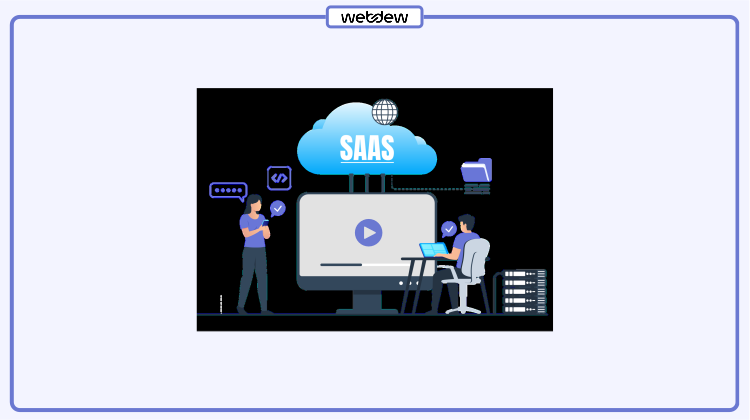
Most B2B SaaS marketing teams already know they need more video. Fewer have a system for deciding which video to make, for whom, and at which point in the buyer journey. The result is a library of one-off assets: a demo nobody watches past the first minute, an expert interview clip that never reaches the right audience, a testimonial that sits on a case study page nobody visits.
Video production only pays off as demand generation when it's mapped to the funnel. This guide breaks down which video types perform at each stage, how to structure a SaaS video production workflow that actually feeds pipeline, and how to decide whether to build the capability in-house or bring in a video production partner. At webdew, this is the same framework we use with SaaS clients to turn one production day into a full quarter of funnel content.
TL;DR
- Video influences the SaaS buying decision at every stage: 87% of B2B marketers report it drives more sales and leads, and video-equipped websites convert at 4.8% versus 2.9% without video.
- Match format to funnel stage. Expert interviews and explainer videos open the funnel, product demos and webinars move prospects through consideration, and testimonials or case study videos close deals.
- Testimonial videos carry outsized weight at decision stage: 92.4% of B2B buyers watch one before purchasing, and testimonial-driven content converts 44% higher than content without it.
- Treat every production day as a content system. One webinar or demo shoot can produce 10 or more repurposed assets across LinkedIn, YouTube, email, and sales outreach.
- Choose in-house, agency, or a hybrid model based on which content is high-volume and low-stakes (in-house) versus high-stakes and buyer-facing (agency or specialist partner).
Why B2B SaaS Marketing Teams Need a Video Production Strategy, Not Just Videos
SaaS buying committees are larger and slower than most other B2B categories. A single deal can involve a technical evaluator, a department head, procurement, and a budget owner, and the sales cycle regularly runs into months. Video works inside that structure because it compresses explanation time and gives every stakeholder a fast, shareable way to understand the product without a live call.
The data backs this up from multiple directions. Draft.dev reports that 87% of B2B marketers say video drives more sales and leads to their brands, and separately that video content is preferred by 90% of B2B buyers, with conversion rates rising from 2.9% to 4.8% on websites that use video. Blare Video's research points the same direction, citing TrustRadius data that 88% of B2B buyers watched video to learn about products or services in the prior three months, with 95% saying video plays an important role in the purchase decision..png?width=1491&height=1055&name=ChatGPT%20Image%20Jul%202%2c%202026%2c%2007_37_09%20PM%20(5).png)
Trust is the other half of the equation. Blare Video found that 93% of B2B buyers say video is important for building trust in a company's ability to deliver on its promises, and that pages with video hold visitors 2.6 times longer than pages without. That combination of trust-building and attention retention is exactly what a demand generation program needs from its content.
None of this means "make more videos." It means matching the right format to the right stage, so the video is doing a specific job in the funnel rather than existing as a general brand asset.
What Video Formats Work Best at Each Demand Gen Funnel Stage?
Video underperforms most often because it's built for the wrong stage. A polished explainer aimed at someone who has never heard of the product category will get skipped past. A feature-heavy demo aimed at a cold audience asks for more commitment than that audience is ready to give. The fix is to plan format around funnel position first, then production quality second.
Top of Funnel: Awareness
At the awareness stage, the buyer doesn't know your product yet and isn't ready for a pitch. Expert interviews and short educational content work best here because they build credibility before a buying need exists. Awakened Films describes this as the stage where a brand builds an audience "before a buying need exists," and notes that this is one of the few formats where longer content can outperform short clips, since viewers who engage with in-depth educational material tend to convert at higher rates over time.
Company culture and brand story content also belongs here. SaaS buyers are evaluating a vendor relationship, not just a feature set, and a short video that shows who they'd be working with reduces hesitation before the first sales conversation happens.
Middle of Funnel: Consideration
Once a prospect knows they have a problem and is actively comparing solutions, explainer videos and product demos take over. Draft.dev's research puts product demos at up to 47 minutes average length with roughly two weeks to produce, and positions them firmly at the bottom of the funnel rather than the top, since a demo only makes sense once someone already understands the category.
Webinars sit in this same window and do double duty as both lead generation and lead nurture. Blare Video's funnel data shows 78% of B2B buyers rely on case studies at the mid-stage, and that demos and case studies together carry most of the weight of the evaluation phase. This is also where an animated SaaS explainer earns its keep: workflows, data flows, and abstract product logic are often easier to show through animation than live footage, which is part of why webdew's own guide to producing a SaaS explainer video treats it as consideration-stage content rather than a top-of-funnel teaser.
Bottom of Funnel: Decision
This is where testimonial and case study video does the heaviest lifting, and the data on this is unusually consistent across sources. D-MAK Productions cites Wisernotify's finding that 92.4% of B2B buyers watch testimonial videos before purchasing, and Zebracat's research showing testimonial-featuring content converts 44% higher at the decision stage. Blare Video separately reports that 77% of B2B buyers prioritize product demos at the final decision point while 78% rely on case studies in the stage just before it.
Specificity is what separates a testimonial that converts from one that gets skipped. Awakened Films puts it plainly: a vague line like "we've been really happy with the partnership" does almost nothing, while a customer stating a concrete result, such as a percentage reduction in onboarding time, gives the next buyer something to actually evaluate.Webdew's roundup of the best SaaS video examples leans on the same principle: the testimonials that get reused across sales decks and landing pages are the ones built around a named, measurable outcome, not general praise.
D-MAK's data also shows the format has a tight sweet spot: 45 to 90 seconds gets a 74% completion rate, compared to 49% for anything over two minutes. Longer documentary-style customer stories still have a place, but they belong on dedicated case study pages and sales enablement decks, not as the primary asset a cold prospect encounters first.
How Do You Build a SaaS Video Production Workflow That Feeds the Funnel?
A workflow that produces one video per shoot is underperforming by design. The teams getting the most out of SaaS video production treat every session as a system with five stages, each with a clear owner and output.
.png?width=1491&height=1055&name=ChatGPT%20Image%20Jul%202%2c%202026%2c%2007_37_04%20PM%20(2).png)
The strategic brief comes first. Before any camera rolls, define what the video needs to do, for whom, and how success will be measured. "Raise awareness" isn't specific enough to guide production decisions; "generate demo requests from mid-market SaaS visitors who've viewed the pricing page" is. This step also decides distribution up front, since a video built for LinkedIn autoplay (no audio, three-second hook) needs a different edit than one built for a gated landing page.
Pre-production covers scripting, casting, and approvals. For testimonial and case study video specifically, this is also where customer selection matters most: the strongest candidates can describe the problem, the evaluation process, and a specific result in their own words, rather than needing to be prompted toward generic praise.
During production, whether it's a live shoot, a remote-recorded testimonial, or a screen-capture demo, the priority is audio quality over visual polish. A slightly soft image with clear audio is watchable; a beautifully lit shot with muddy sound gets abandoned.
Post-production and repurposing is where a single production day turns into a quarter's worth of content. A one-hour webinar or customer interview can yield short social clips, an audiogram, a blog post built from the transcript, and multiple aspect-ratio cuts for different platforms, all from one recording session.
Distribution and measurement come last, and platform shapes format here. LinkedIn favors native video with captions and a strong opening few seconds; YouTube supports longer, keyword-optimized educational content; gated landing pages can support longer, higher-commitment formats since the viewer has already opted in.
What Does a SaaS Demand Gen Video Funnel Look Like in Practice?
Stax Capital, a webdew client in the alternative investment space, illustrates the funnel-mapping principle well, even outside a pure SaaS product. The company's marketplace involved a genuinely complex sale: prospects needed to understand tax-deferred investment strategies like 1031 exchanges before they'd register, and text-heavy explanations were creating high drop-off on key landing pages.
Rather than producing a single generic overview video, webdew segmented the video content by funnel purpose. Explainer videos broke down complex concepts to warm up cold traffic. Expert insight videos featuring company leadership built credibility ahead of advisor calls. Marketplace walkthrough videos reduced friction right before signup by showing exactly what a prospect could expect. Each category had a distinct job, and each was placed at the point in the journey where it would do the most good.
The result, according to the Stax Capital video portfolio case study, was a tripling of lead quality and a shorter sales cycle, driven largely by prospects arriving at conversations already informed and more confident. That's the practical version of funnel-stage mapping: not more videos, but the right video type placed exactly where it removes a specific piece of buyer hesitation.
Brand clarity work follows a similar logic even when the goal isn't lead volume. In webdew's Calendar.com explainer video case study, the objective was to help a technical product read clearly to a broad audience through a single, tightly scripted explainer rather than pages of written description, reinforcing that even one well-placed video can carry disproportionate weight when it matches what the audience needs at that moment.
Should You Produce SaaS Videos In-House or Work with a Video Production Partner?
This decision usually comes down to volume versus stakes, not budget alone.
In-house production makes sense for high-frequency, lower-complexity content: personalized sales outreach clips, quick social cuts, internal training, and event coverage. If someone on the team is comfortable on camera and has a reasonable setup, this content can move fast without external coordination. The tradeoff is a quality ceiling and inconsistent output when that person is pulled onto other priorities.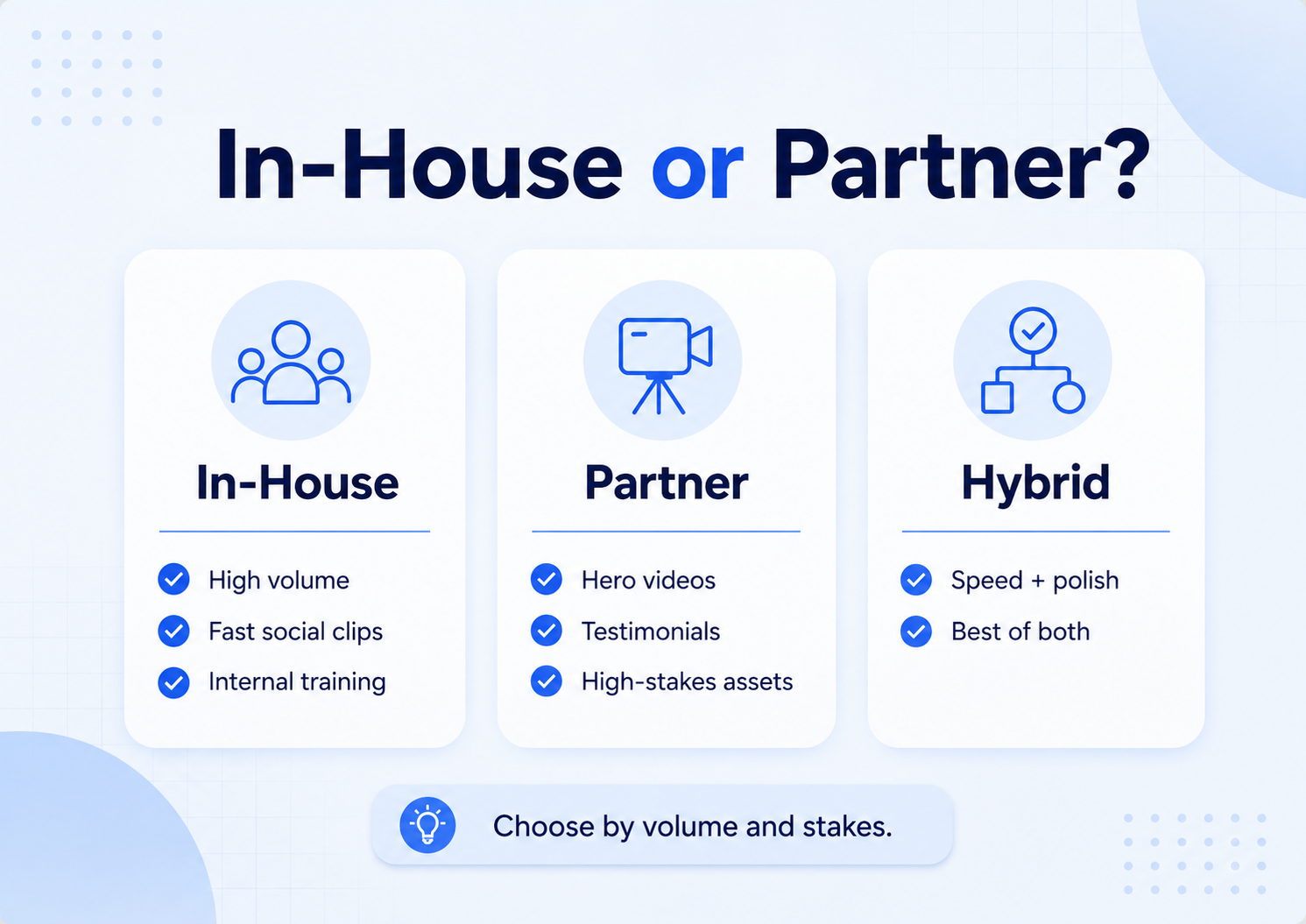
A specialist video production partner earns its cost when quality is load-bearing: hero brand films, customer testimonials used in sales decks or paid ads, and case study videos shown to enterprise prospects. A poorly produced testimonial can actively undermine trust rather than build it, which makes this exactly the wrong place to cut corners.
Most SaaS teams land on a hybrid model. Volume and speed stay internal; polish and pipeline-critical content go to a partner. webdew's explainer video production service is built around that second category specifically, handling narrative development, motion design, and platform-specific delivery so internal teams don't have to build that capability from scratch for a handful of high-stakes assets per year..png?width=1491&height=1055&name=ChatGPT%20Image%20Jul%202%2c%202026%2c%2007_37_05%20PM%20(3).png)
When evaluating a partner, three questions matter more than portfolio polish: Have they produced video for companies with a comparable sales cycle and buying committee size? Do they help shape the creative brief, or do they just execute whatever brief they're handed? And what does the revision process look like, since unclear revision rounds are the most common way video budgets quietly overrun.
How Do You Measure ROI from SaaS Video Production?
View count on its own says very little. A video with a large view count and a low completion rate is doing less work than one with far fewer views and a high completion rate, since completion is much harder to fake through paid distribution than raw views.
Track metrics by funnel stage instead of using one blanket KPI:
- Awareness stage: watch time, completion rate, and social shares indicate whether the content is compelling enough to hold attention.
- Consideration stage: post-view behavior matters more than the view itself. Track pricing page visits, demo requests, and webinar signups tied to specific video assets through UTM parameters.
- Decision stage: talk to sales directly. Ask whether deals where the prospect engaged with a testimonial or demo close faster or at higher rates than deals where they didn't. That comparison, not a dashboard of vanity metrics, is the most honest read on whether SaaS video production is actually shortening the sales cycle.
Multi-touch attribution tools help connect video engagement to pipeline over a long B2B cycle, but a clean CRM and a habit of checking closed-deal patterns against video engagement will surface most of what a marketing leader needs to know before any specialized tooling is in place.
Conclusion
Video production for SaaS demand generation works when it's treated as a system mapped to the buyer journey, not a series of one-off assets. Awareness-stage content builds credibility before a need exists. Consideration-stage explainers and demos remove the confusion that stalls evaluation. Decision-stage testimonials give the buying committee the specific, peer-validated proof it needs to move forward. Get the stage-to-format mapping right, and a single well-planned production day can fuel a full quarter of pipeline-driving content. webdew works with B2B SaaS marketing teams to build exactly this kind of video funnel, from initial strategy through production and repurposing, so every asset has a defined job before it's ever filmed.
Dive Into our
Client Testimonials
Listen to business owners like you share how we’ve helped them grow. Your story could be next!




.svg)
“Recently we reached out to Webdew for a website inside of HubSpot and they also did some mocking automation for us.”
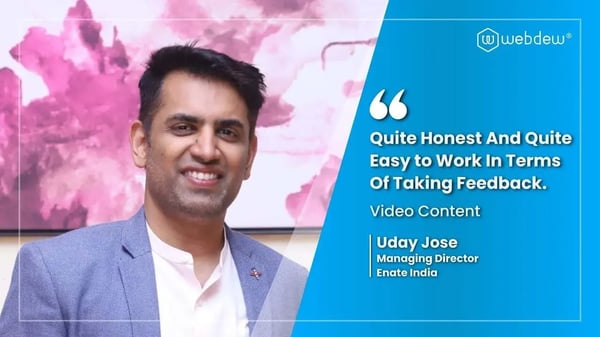
“Webdew team was quite honest and quite easy to work with in terms of taking feedback implementing it, showing that it doesn’t happen again and things like making sure that it meets our expectations.”
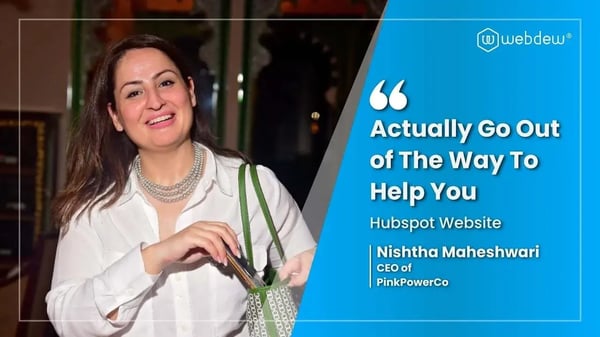
“We worked with webdew to help us build our HubSpot website and they did an amazing job with it. They were very quick.”
“webdew has helped us optimize the sales and marketing processes, and this is automating a lot of processes.”
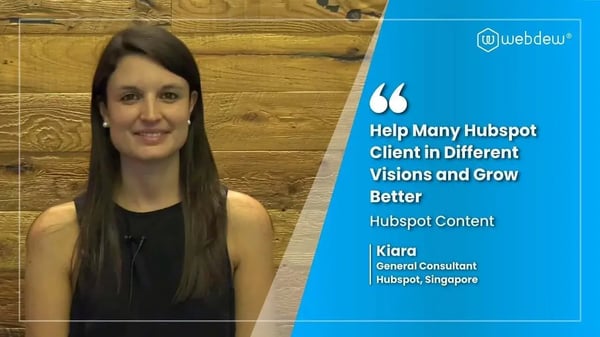
“Hi everyone my name is Kara and I work as a channel consultant at HubSpot Singapore. I’ve been working closely with webdew agency”
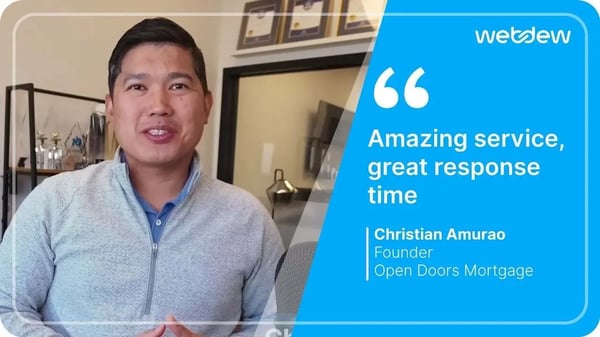
“Hi my name is Christian from OpenDoors Mortgage team and I’m in the mortgage business and just trying to work on new projects and kind of incorporating HubSpot for my operations”
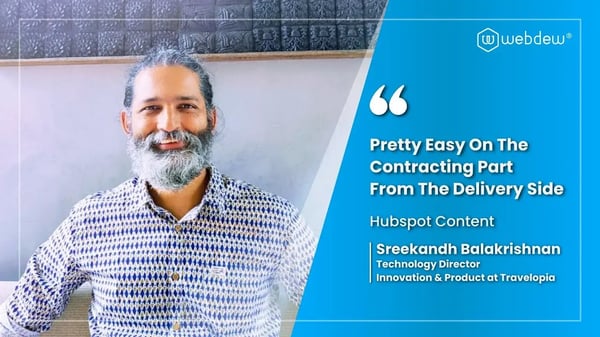
“I’m one of the technology directors for Travelopia. We are the largest experiential travel company in the world. We’ve engaged webdew recently, not recently, it’s been about a couple of quarters now.”
“We worked with Chehak over the past several months to create a series of animated videos for an academic planner that we produce. And from the very beginning, she was absolutely professional and a pleasure to work with.”


6x
We helped clients multiply their website conversion rates through strategic design and UX optimization.
20%
Our marketing campaigns led to a 20% uplift in customer engagement across digital channels.
2K+
Delivered over 2,000 qualified leads through targeted funnels and smart automation.
120+
Our video content has earned 120,000+ views, driving brand awareness and audience retention.
“I recently had the pleasure of working with Chehak on a video demo project, and I was thoroughly impressed with her services.”
.svg)

Additional Resources
Access expert tips, trends, and strategies designed for small businesses. Stay ahead of the curve and make informed decisions with our comprehensive resources!