Pros
- You will get extensive themes
- Highly scalable
- Can expand your website’s functionality
- SEO-friendly
Cons
- A steep learning curve

HubSpot Services

HubSpot Audit
HubSpot Platform
webdew SaaS Services

HubSpot Audit
 We typically respond the same day
 We typically respond the same day
Nowadays, the eCommerce industry is booming, with many small business owners opening online stores. Unlike traditional businesses, eCommerce stores have more potential to achieve success and capture the audience’s attention.
However, many hesitate a lot, primarily because they think of a time-consuming and complicated process. But as long as you choose the right eCommerce website builder, there’s nothing to worry about.
Choosing the right online store builder is important. Depending on your choice, it will either make or break your eCommerce business. Thus, you must ensure you’re building your website with the right builder.
In this article, I discuss some of the best website builders for online stores. I will share my own verdict, along with the pros, cons, and pricing.
Now, choosing the right eCommerce website builder is important. I have handpicked some of the best ones. Make sure you read this article to the end to know their features.
WooCommerce is the perfect choice for business owners looking for flexibility in a website builder. This popular choice will let you customize various aspects of your online store. You can also use the WooCommerce plugin to convert your traditional WordPress website into an eCommerce store. For instance, there are many WooCommerce custom product designer plugins out there that help set up your products with advanced features that are easy to configure.
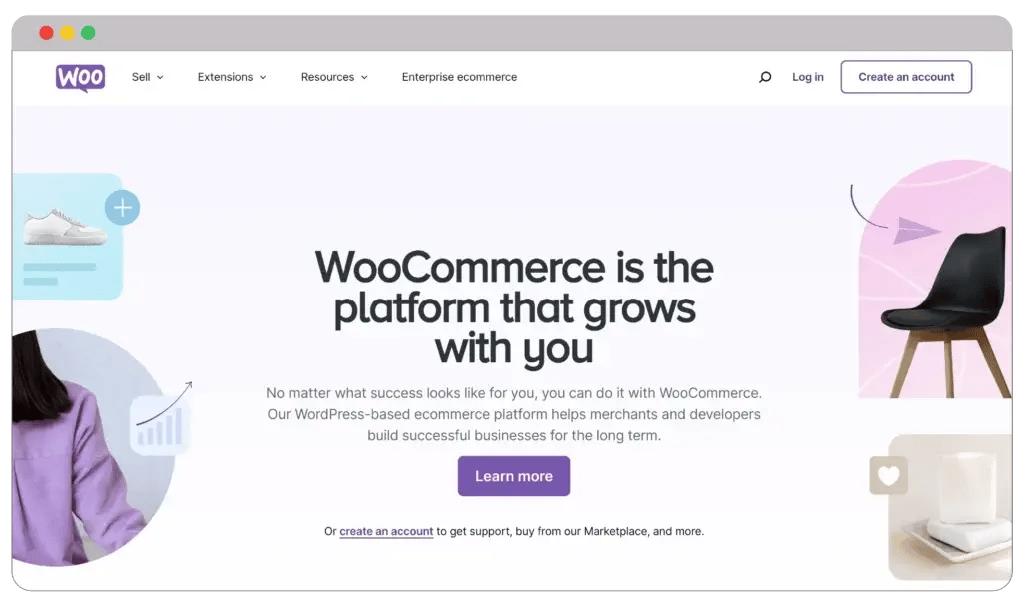
After you use WooCommerce, you can access its in-built eCommerce features. They include payment processing, inventory management, and shopping options. These features will make your online store highly flexible.

Now, let’s discuss online stores with certain needs. WooCommerce comes with 100+ extensions for different business types. Depending on your business size and structure, you can find something really unique.
Pros
Cons
Among all the features, WooPayments is undoubtedly the most eye-catching. This feature will let your store process debit and credit card payments using local payment methods. But you must bear payment extension charges.
Apart from the functionality, you can also customize your store appearance. You can browse the free themes or choose from a premium one. However, premium ones will be sold separately on platforms like Envato or ThemeForest.
However, since WooCommerce is community-driven, you won’t find any dedicated support. This may be problematic for some users. But you will find various online resources to troubleshoot any issues.
Hostinger is another popular eCommerce website builder you must know about. It’s perfect for budding business owners who want to establish a solid brand presence quickly.
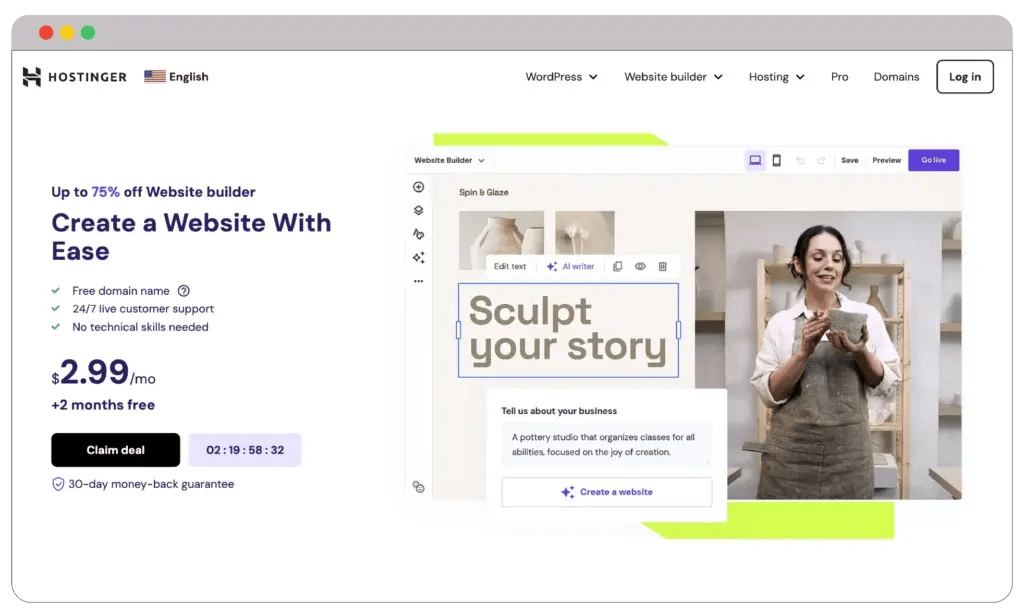
Hostinger comes with a simple drag-and-drop builder. And I really like its vast site elements, making it an excellent option for beginners. No need to worry about coding or website creation experience.

The AI features are awesome. Regardless of your needs, it can simplify your website building process and create an eCommerce website with images in seconds. However, make sure you give relevant prompts.
Pros
Cons
That’s not all the AI can do. The AI tools can handle various marketing and website branding tasks. It can create subtitles, product descriptions, and image alt text, saving you time.
1. Premium website builder: $2.99/month
2. Business website builder: $3.99/month
Now comes an important part. You will get separate tools for creating unique blog content and logo design. Thus, you don’t need to hire professionals, as the AI will handle most tasks.
Once you create your eCommerce website, leverage the benefits of built-in speed optimization techniques. You will also receive 24/7 assistance via email and live chat.
Magento will prove highly beneficial for online businesses planning to boost their overall sales. You will get three versions: Adobe Commerce, Magento 2, and Adobe Managed Services. However, I will only focus on Magento 2, which comes with a website builder.
If you offer various products, you will like Magento’s catalog management system. Its categorization and grouping features allow you to list as many products as you want. The inventory system features checkout protection, which will be useful when multiple customers purchase the same product.

Magento also comes with multi-store features. This way, you can simplify site management tasks. You can also use the same admin panel to manage multiple stores, which is pretty convenient if you ask me. Magento merchants can also utilize a Magento 2 POS software to integrate online and offline store data, managing multiple stores simultaneously without manual work or human errors.
Pros
Cons
Its built-in CMS system will help you with content optimization. Thus, you can give users access based on their permissions. No need to worry about unsecured privileged accounts.
1. Basic: $10.99/month
2. Standard: $11.99/month
3. Premium: $14.99/month
There’s another feature to improve the shopping experience. The Remote Shipping Assistance will help you provide customized support. If your customers require assistance with orders, you can log in and resolve their issues via a video call or chat.
However, I must say that Magento isn’t completely user-friendly. It has a steep learning curve. So, it will prove slightly difficult for beginners to understand.
If you’ve been following my blog, you know how powerful Shopify can be. Its website builder is highly powerful and effective. But do you know how this eCommerce website builder stands apart?
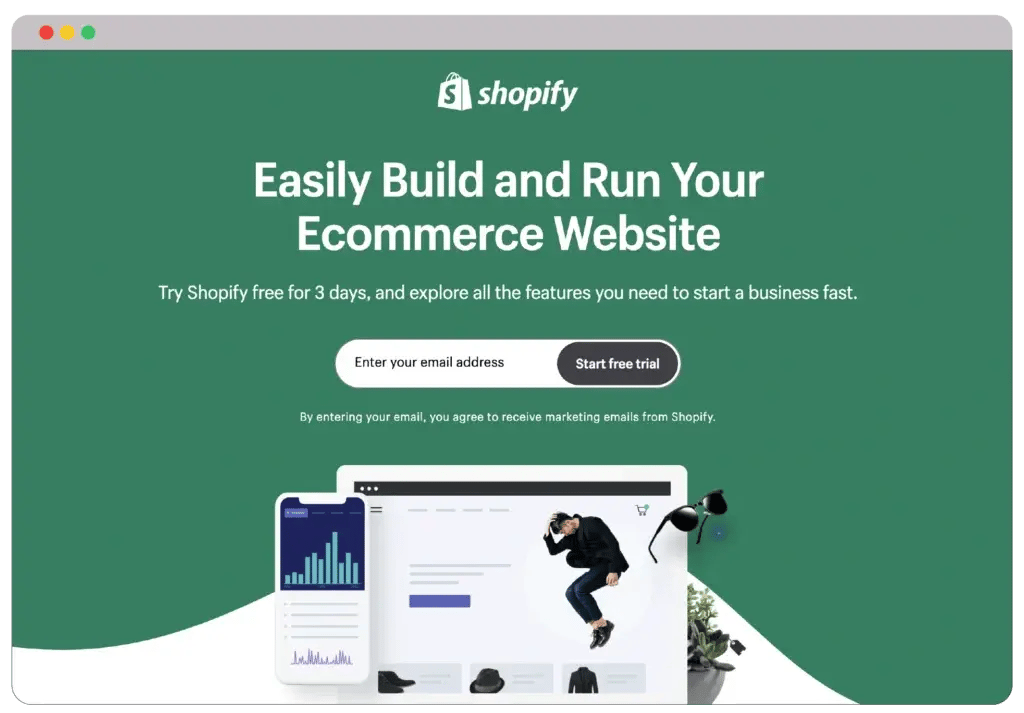
Shopify is designed for business entities. Thus, you can start selling unlimited products and distributing store access through various collaboration accounts. It can also track your business’s inventory across different locations. This way, multiple people can check out at the same time. For enhanced marketing strategies, consider utilizing SMS marketing platforms for Shopify stores to reach a wider audience and boost sales.
Shopify’s POS system is highly compatible with other types of POS hardware. For a more flexible option, consider using a cloud POS system. However, to get the advanced features, you must use Shopify POS Pro, which will cost extra.
Pros
Cons
But that’s not all. There are other notable features, including customer segmentation, which will help you achieve better retention. Moreover, you will also like its fraud analysis and marketing automation features.
1. Free Trial: $0
2. Basic: $39/month
3. Shopify: $105/month
4. Advanced: $399/month
5. Plus: $2300/month
However, there’s one thing I should share. Shopify’s performance is good, hands down. But sometimes, you may notice occasional lags and slower website reloads. In such cases, contact your hosting platform, especially if using Hostinger.
That being said, you also need to bear charges for credit card transactions. But if you use Shopify payments, the processing fees will be levied.
Ecwid allows you to turn any existing website or social media account into an online store. To begin selling online, just register and connect the platform with yours.
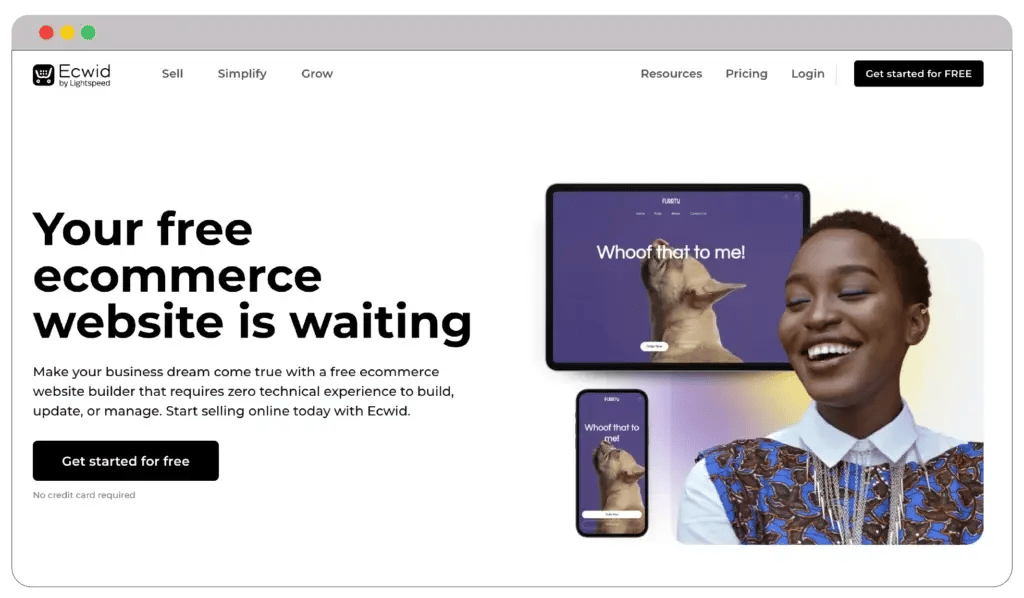
For omnichannel retailing, the widget can be connected to well-known online marketplaces like Amazon and eBay. You can use social media sites’ automatic advertising technologies to convert website traffic and followers into paying clients.

Ecwid offers both recurring subscription price models and pay-what-you-want options. Accept payments at 2.9% + $0.30 per transaction using Ecwid’s preferred payment processor, Lightspeed Payments. As an alternative, select from more than 70 national third-party payment channels.
Pros
Cons
Both premium and free apps are available in Ecwid’s App Market to expand store capabilities. For a surcharge, the platform provides bespoke development services in case you cannot locate what you require.
1. Free: $0
2. Vennture: $21/month
3. Business: $39/month
3. Unlimited: $89/month
Email assistance is available to both paid and free trial customers, while chat support is only available to the latter. Ecwid, a hosted solution, handles website optimization, upkeep, and security.
The three eCommerce sites I examined had an LCP of about 2 seconds, took 4 to 14 seconds to load completely, and received a C on GTmetrix.
BigCommerce is an effective eCommerce platform for companies with extensive clientele or complicated requirements. Headless commerce, which divides your store’s front end from its back end, is one of its standout characteristics.

Using content management systems (CMSs) like WordPress enables you to establish several storefronts for customized customer experiences, with BigCommerce handling store operations. It’s a useful feature for supporting several brands or client segments.

Search engines, social media sites, and well-known marketplaces all offer omnichannel selling. The platform’s real-time inventory management technology keeps customers loyal to the brand and helps prevent delivery delays.
Pros
Cons
For local eCommerce and in-person sales, BigCommerce provides click-and-collect capabilities along with a store finder based on ZIP codes.
Make sure that each retail location has information about your pickup alternatives so that customers can quickly locate the closest one, which will increase sales.
Other noteworthy built-in capabilities are the ability to integrate with POS systems, blog, and retrieve abandoned carts.
Big Cartel serves independent creative sector vendors that wish to earn money online. Those without prior web programming knowledge may easily navigate the onboarding process because of its pre-made templates and point-and-click editor, which streamlines shop design processes.
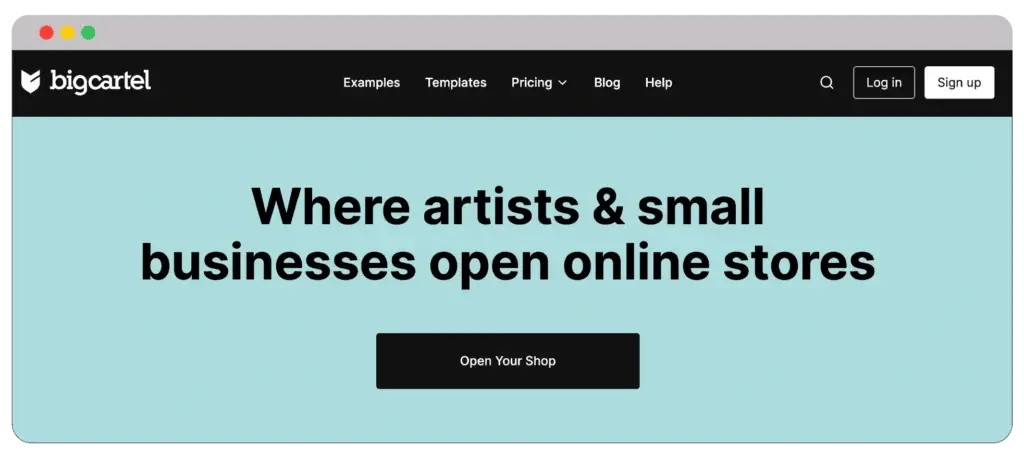
Sellers can take payments in person via the platform’s app or via Stripe and PayPal. With no transaction costs, the platform is incredibly cost-effective when combined with the free plan.

Free layouts, automatic sales tax for US-based companies, and product import from Squarespace, Shopify, and Etsy are all included in the paid and free eCommerce plans. However, support is only offered during regular business hours if you’re not on the most expensive subscription.
Pros
Cons
The hosted eCommerce platform is among the finest on this list in terms of performance. According to our tests, the major content loaded in approximately one second, with an average page load time of 2.3 seconds. GTmetrix gave two of the three Big Cartel websites an A rating.
1. Gold: $10.99/month
2. Platinum: $12/month
3. Diamond: $24/month
Big Cartel provides SEO techniques to improve the ranks of websites even further. For simpler indexing, it automatically creates a sitemap and a robots.txt file. Regretfully, meta descriptions for already-published product pages cannot be altered.
Advanced template customization, shipping discount label printing, inventory tracking, and ad support are all included in the premium plans. With Google Analytics, paid users can use a custom domain to monitor store performance.
Another eCommerce website builder that supports offline payments is Square Online. It easily interfaces with Square POS software, allowing retailers to control online and offline transactions from a single platform.
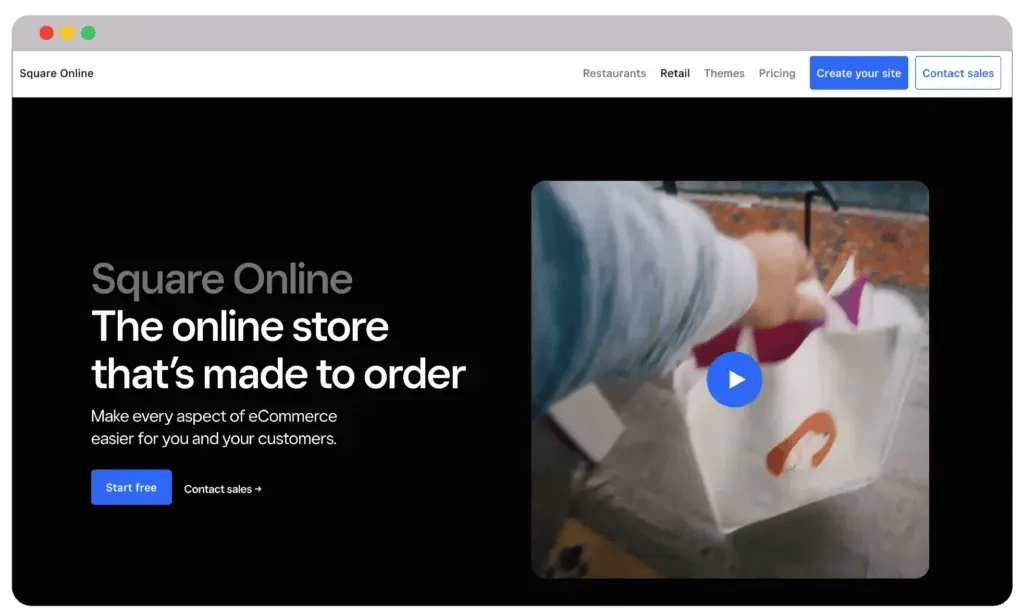
Square Online’s drag-and-drop eCommerce builder makes it easy for novice users to set up their stores. Even though this eCommerce solution isn’t as adaptable as others, you can still customize the store design to fit your brand by changing the color scheme and adding a unique logo.

Offline businesses can engage outside couriers for order fulfillment at a nominal cost. Square also permits in-house delivery utilizing your couriers and offers discounts of up to 55% off UPS rates.
Pros
Cons
Security is one of its most notable aspects. With Square Online’s integrated fraud protection solution, Square Risk Manager, you can detect patterns of payment fraud and create personalized rules and alerts to reduce the possibility of chargebacks.
1. Free: $0
2. Plus: $29/month
3. Premium: $79/month
For even greater login security, prevent shady IP addresses from visiting your store and turn on two-factor authentication. In terms of speed, one of the three Square Online websites we examined took more than eight seconds to fully load, while the other two took less than five.
Their LCPs, which averaged 1.1 seconds, were likewise comparable. None of them received a GTmetrix score worse than a C, which is encouraging for those who value performance.
Among the most widely used open-source eCommerce systems are WooCommerce, Magento, and OpenCart. With the help of modules for functionality and customization, customers can build an eCommerce website that suits their demands.
The capabilities that this platform has integrated for international sales set it apart. It has 36 payment gateways and supports multiple currencies, making it simple to take payments from overseas. More than 40 languages, including those that read from right to left, can be translated into it.

With the extensive array of integrated and module-based shipping options that OpenCart offers, physical goods retailers can increase the size of their customer base.
Pros
Cons
As an alternative, they might make use of the platform to market subscriptions that require regular payments or digital goods. OpenCart is a self-hosted platform, so the functionality of your website is dependent on the web host you select.
Only one of the three websites that we tested fully loaded in less than four seconds, demonstrating the significance of choosing the correct hosting. The LCP spanned two to four seconds.
However, there’s one catch. Module installation and core software upgrades require technical knowledge unless you use OpenCart Cloud.
Sellfy is a website worth checking out if you’re a creator trying to sell products online. This specialized online store provides resources for making money from digital assets, products, and subscription services.

Print-on-demand services are particularly useful for artists with a significant fan base. All you need to do is provide the design, select the items, and establish the pricing; Sellfy will handle the manufacturing and delivery.

For users who are not technical, the onboarding procedure is fairly easy to follow. Select one of the five available templates, then use the point-and-click editor to alter the elements.
Pros
Cons
Stripe and PayPal are accepted online payment methods for Sellfy. Email marketing, affiliate marketing, and cart abandonment features can all increase purchases. Your store can serve an international customer base with automatic language translation.
1. Starter: $22/month
2. Business: $59/month
3. Premium: $119/month
Despite its visually complex design, Sellfy’s websites had an average page load time and LCP of 3.9 seconds.
To improve user experience and comply with Google’s three-second rule, we advise compressing photos, particularly those in the main text.
GoDaddy is a reliable eCommerce website builder that can help you sell goods both locally and online. You may enhance your physical business by creating a corresponding online presence.
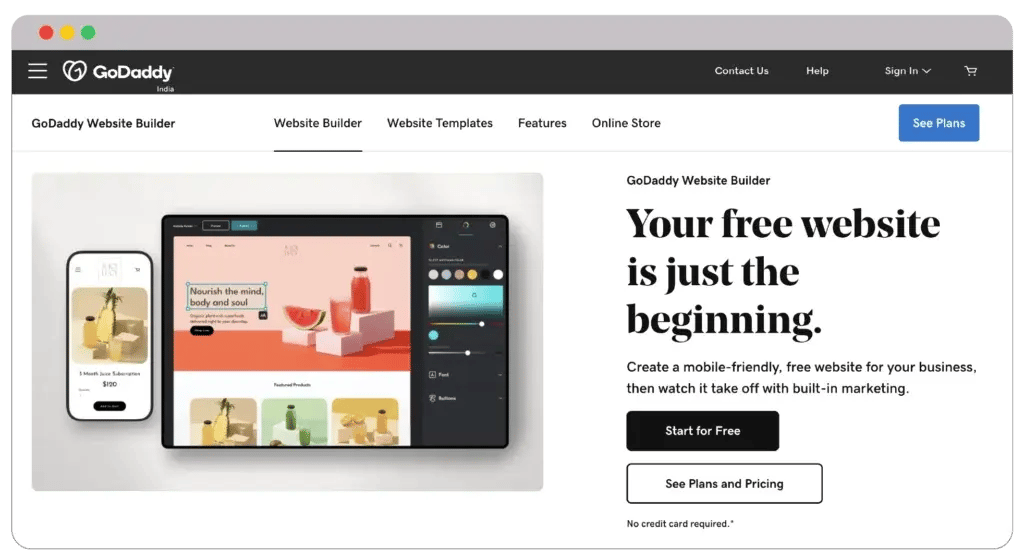
The correct clients should be able to locate your company, and GoDaddy’s marketing tools can assist you in promoting your name among the pertinent search results. Since the research was conducted last year, GoDaddy’s e-commerce performance has improved, especially regarding website functionalities and design options.

However, GoDaddy lacks the strength of Squarespace, Wix, or Shopify. GoDaddy’s user-friendly settings and basic eCommerce editor make it the perfect choice for novices, helping businesses establish their online presence.
Pros
Cons
GoDaddy’s marketing features, such as social media integration and SEO, will help you reach your target market with your optimized store. Use GoDaddy’s point-of-sale (POS) system to synchronize your online and offline sales.
1. Basic: $10.99/month
2. Standard: $11.99/month
3. Premium: $14.99/month
4. Commerce: $20.99/month
Since you can track everything from your GoDaddy home, this is a wonderful add-on if you want to run both an online store and a real business.
Get a customized SEO dashboard to enhance your web store efficiently. Choose your keywords, improve your content, and customize how Google displays your website. Integrate Google with your online store to increase local customers’ visibility.
So, there you have it. Top 11 best website builders for eCommerce stores. With these powerful site builders, you can ensure your online store looks amazing and functions properly.
However, I recommend you determine your needs first. Sometimes, even the best eCommerce website builder will fail to satisfy your unique needs, not because of its drawbacks but because of what you demand.
I hope you liked this article. What are your thoughts on the best web builder for eCommerce shops? Let me know in the comments below.
Listen to business owners like you share how we’ve helped them grow. Your story could be next!






We contracted webdew to build our new website. And let me tell you, they did a fantastic job. Their team was really easy to communicate with.”
We contracted webdew to build our new website. And let me tell you, they did a fantastic job. Their team was really easy to communicate with.”
We contracted webdew to build our new website. And let me tell you, they did a fantastic job. Their team was really easy to communicate with.”
“We worked with Chehak over the past several months to create a series of animated videos for an academic planner that we produce. And from the very beginning, she was absolutely professional and a pleasure to work with.”


We helped clients multiply their website conversion rates through strategic design and UX optimization.
Our marketing campaigns led to a 20% uplift in customer engagement across digital channels.
Delivered over 2,000 qualified leads through targeted funnels and smart automation.
Our video content has earned 120,000+ views, driving brand awareness and audience retention.
“I recently had the pleasure of working with Chehak on a video demo project, and I was thoroughly impressed with her services.”


Access expert tips, trends, and strategies designed for small businesses. Stay ahead of the curve and make informed decisions with our comprehensive resources!