

 We typically respond the same day

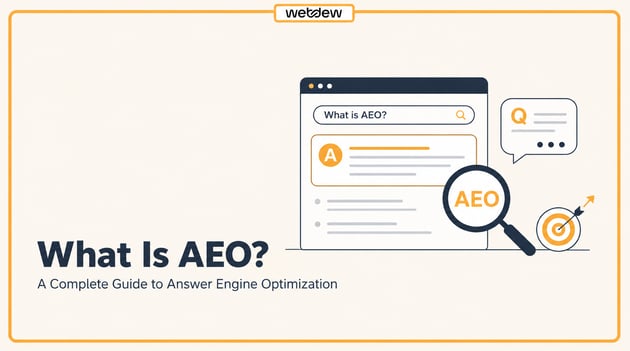
Someone researching a purchase used to open Google, scan a page of links, and click two or three. Now they open ChatGPT and ask. The reply names a few brands, summarizes the trade-offs, and hands back a shortlist, no clicking required.
That shift has a name on the marketing side: Answer Engine Optimization, or AEO. This guide covers what AEO is, why it's pulling budget away from traditional search tactics, how it differs from the SEO most teams already run, and the first moves a business can make to show up when buyers ask AI.
What AEO actually means
Answer Engine Optimization is the practice of improving how often and how accurately a brand appears inside AI-generated answers. The platforms in question are the ones people now treat as research assistants: ChatGPT, Google's AI Mode and AI Overviews, Perplexity, Claude, Gemini, and Microsoft Copilot.
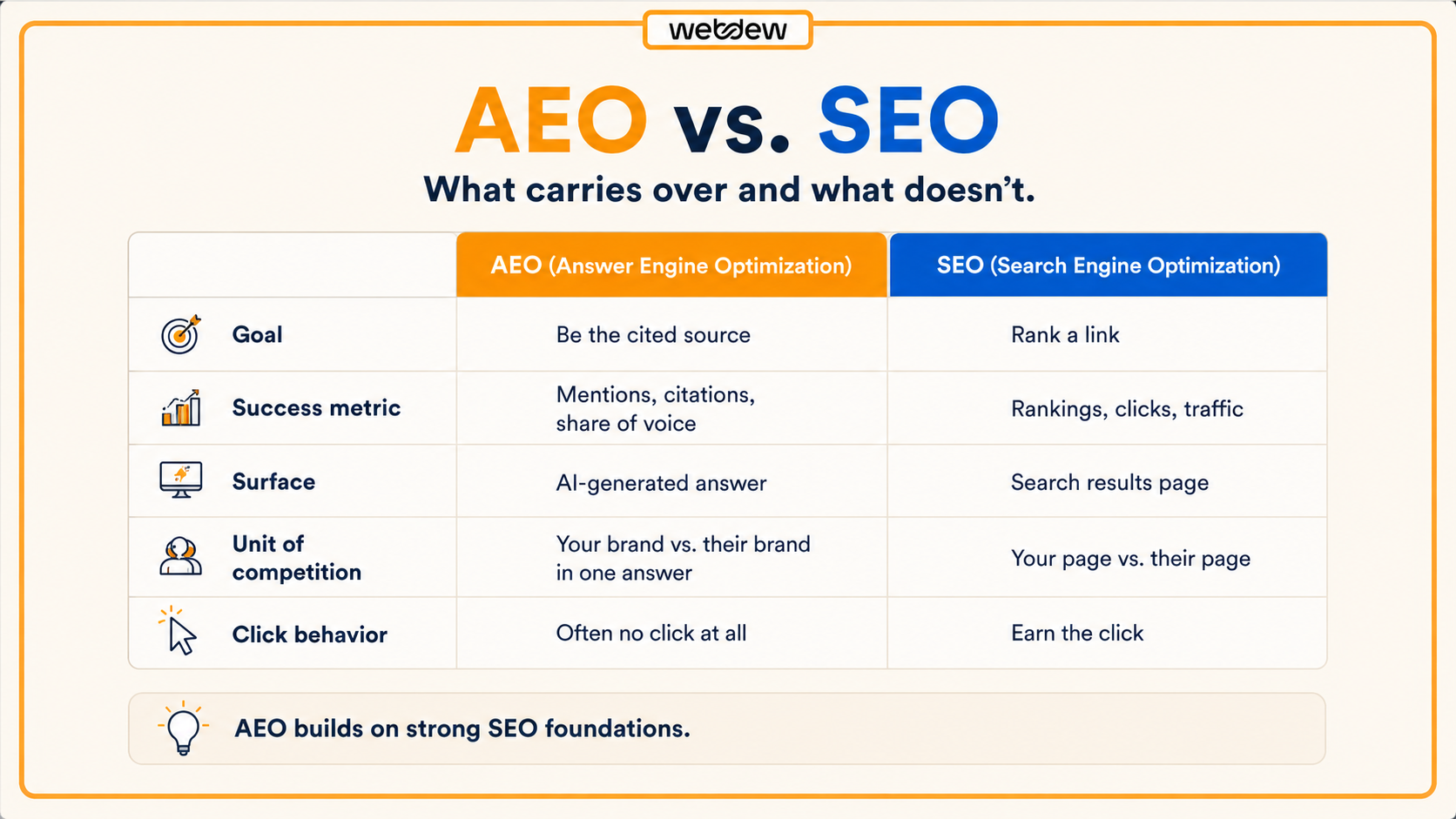
Traditional SEO optimizes a page to rank in a list of links. AEO optimizes for something different: being the source an answer engine pulls from and names when it responds. The win condition moves from "rank on page one" to "be in the answer."
The two share DNA. Both reward authoritative, well-structured content from trusted sources. But the success metric changes. Instead of rankings and clicks, AEO tracks mentions (does the AI name your brand?) and citations (does it reference your content as a source?).
Why AEO matters now, not later
The case for AEO rests on a simple change in behavior: people are getting answers without leaving the search results, and increasingly without using a search engine at all.
In the first four months of 2026, 68% of Google searches ended without a click, according to SparkToro's analysis of Similarweb clickstream data. That's up from 60% in 2024, the fastest acceleration the zero-click trend has seen in a decade, driven largely by AI features that answer questions directly on the page.
The takeaway from that research is blunt. As SparkToro put it, there's little point in trying to win back lost traffic by getting better at SEO alone; rankings still matter, but they no longer earn clicks the way they did. The traffic moved to the answer itself.
Two things follow for any business that depends on being found:
First, the answer is the new shortlist. When an AI names three vendors in a category, those three get considered, and the rest don't. There's rarely room for a fourth.
Second, that shortlist forms before anyone visits a site or talks to sales. By the time a prospect reaches out, the AI has already framed who the credible options are.
A business can rank well on Google and still be absent from that answer. AEO is the work of closing that gap.
AEO vs. SEO: what carries over and what doesn't
AEO isn't a replacement for SEO. It's a layer that sits alongside it, and the relationship is closer than the "SEO is dead" headlines suggest.
Semrush analyzed 5 million URLs cited by ChatGPT Search and Google AI Mode and found that AI platforms tend to cite pages with strong technical foundations, many of them the same factors that drive traditional SEO success. Structured data, clean URL structure, and strong engagement signals all showed up more often on cited pages.
So the fundamentals transfer. What changes is how they're evaluated. The Semrush study frames technical SEO less as a checklist of ranking signals and more as a foundation that makes content easy for AI systems to retrieve, interpret, and cite.
Here's where the two diverge in practice:
The practical implication: a team can't measure AEO with the same dashboard it uses for SEO. Traffic and rankings miss most of what's happening because the influence lands before the click, or without one.
How AI answer engines decide who to cite
AEO gets less mysterious once you see how an answer engine builds a response. The rough sequence:
Someone asks a question. The engine pulls from multiple sources across the web, including pages that rank well in traditional search, content on trusted third-party domains, and user-generated discussions. It synthesizes those into an answer and, increasingly, names or links the sources it leaned on.
Which sources get pulled is the whole game, and it's more volatile than most teams expect. Semrush tracked citations across 230,000 prompts over 13 weeks and watched ChatGPT's citation of Reddit collapse from nearly 60% of responses to around 10% in a matter of weeks, after a change in how the platform sourced information. Wikipedia saw a similar drop on ChatGPT while staying steady on other engines.
Two lessons sit inside that data. First, citation patterns differ by engine; what ChatGPT trusts isn't identical to what Google's AI Mode or Perplexity trusts. Second, those patterns move fast, which makes AI visibility something to monitor continuously rather than audit once a year.
The same study found that third-party domains carry real weight. Reddit, LinkedIn, Wikipedia, Forbes, and Medium ranked among the most-cited sources across platforms. A brand's own site matters, but so does its presence on the domains AI already trusts in its category.
What goes into an AEO strategy
A working AEO program tends to cover four areas. None of them is exotic; the difference is that they're aimed at answering engines, not just the search results page.
Visibility measurement. Before anything else, a business needs to know whether AI engines mention it at all, how often, and how that compares to competitors. This is the baseline every later decision references.
Content built to be cited. Answer engines favor content that directly addresses real questions. Clear question-and-answer structure, concise summaries, and well-organized pages tend to surface more often than dense, meandering copy. The Semrush technical study also points to structured data, Organization, Article, and FAQ schema appearing more frequently on cited pages, and to descriptive URL slugs in the 17 to 40 character range.
Authority across trusted sources. Because answer engines pull heavily from third-party domains, AEO extends past a brand's own website. Earned mentions, presence in relevant discussions, and citations on domains AI already trusts all feed the model's sense of who's credible.
Continuous tracking. Given how fast citation patterns shift, AEO is a monitoring discipline. The brands that treat AI visibility as a live metric, tracked the way SERP rankings are tracked, catch changes while they can still respond.
A note on the "educated click"
One pattern worth understanding: the clicks AEO does earn tend to be better ones.
Semrush describes the "educated click", a user who lands on a site after an AI engine has already explained who the brand is and why it matters. These visitors arrive briefed. They engage more deeply, bounce less, and convert faster than visitors from a cold search.
The strategic read: AEO isn't only a traffic play. Even when it sends fewer visitors than peak-era SEO once did, the visitors it sends arrive with informed intent. Fewer clicks, warmer clicks.
How to start with AEO
A business doesn't need to overhaul everything at once. A sensible first sequence:
Start with a baseline. Check how the major answer engines currently describe the brand and the category, and where competitors show up instead. This is the single most clarifying step, because most teams have never looked.
Find the gaps. Identify the buyer-intent questions where competitors get named and the brand doesn't. Those gaps are the content roadmap.
Build answer-first content. Address those questions directly, with clear structure and the technical foundations, schema, clean URLs, and server-side rendering that make content easy for AI to parse.
Track and adjust. Monitor mentions and citations over time, and treat sharp shifts as signals rather than noise.
None of this replaces good SEO or good content. It points the same disciplines at a new surface, the answer, where a growing share of decisions now get made.
The shift in one line
For years, being found meant ranking. Now it increasingly means being the answer. AEO is the work of making sure that when someone asks AI about a category, the brand is part of the response, not absent from it.
The businesses paying attention now, while citation patterns are still forming and most competitors haven't started, are the ones shaping how AI describes their category for the buyers who come next
Dive Into our
Client Testimonials
Listen to business owners like you share how we’ve helped them grow. Your story could be next!





.svg)
“Recently we reached out to Webdew for a website inside of HubSpot and they also did some mocking automation for us.”
“Webdew team was quite honest and quite easy to work with in terms of taking feedback implementing it, showing that it doesn’t happen again and things like making sure that it meets our expectations.”
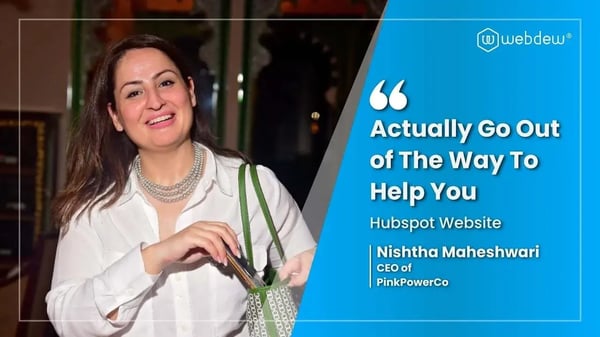
“We worked with webdew to help us build our HubSpot website and they did an amazing job with it. They were very quick.”
“webdew has helped us optimize the sales and marketing processes, and this is automating a lot of processes.”
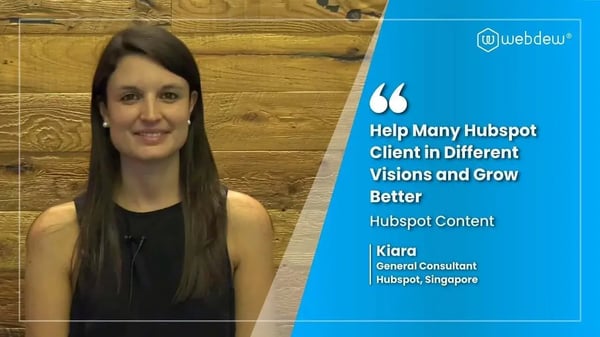
“Hi everyone my name is Kara and I work as a channel consultant at HubSpot Singapore. I’ve been working closely with webdew agency”
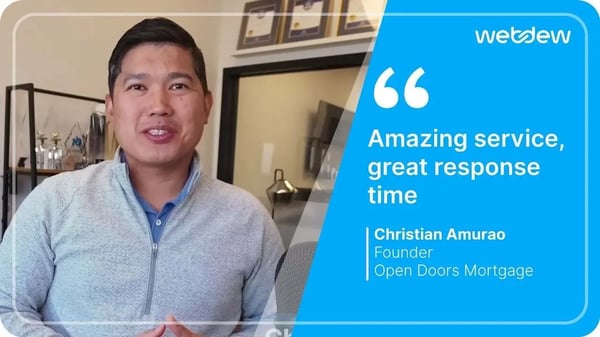
“Hi my name is Christian from OpenDoors Mortgage team and I’m in the mortgage business and just trying to work on new projects and kind of incorporating HubSpot for my operations”
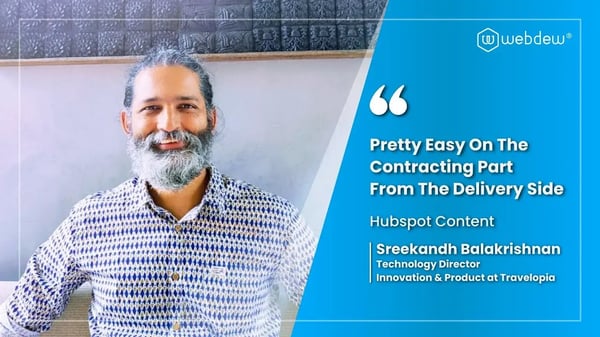
“I’m one of the technology directors for Travelopia. We are the largest experiential travel company in the world. We’ve engaged webdew recently, not recently, it’s been about a couple of quarters now.”
“We worked with Chehak over the past several months to create a series of animated videos for an academic planner that we produce. And from the very beginning, she was absolutely professional and a pleasure to work with.”


6x
We helped clients multiply their website conversion rates through strategic design and UX optimization.
20%
Our marketing campaigns led to a 20% uplift in customer engagement across digital channels.
2K+
Delivered over 2,000 qualified leads through targeted funnels and smart automation.
120+
Our video content has earned 120,000+ views, driving brand awareness and audience retention.
“I recently had the pleasure of working with Chehak on a video demo project, and I was thoroughly impressed with her services.”
.svg)

Additional Resources
Access expert tips, trends, and strategies designed for small businesses. Stay ahead of the curve and make informed decisions with our comprehensive resources!