Pros
- Drag-and-drop editor for seamless experience
- You’ll get free hosting and SSL certificate
- Affordable and flexible pricing plans
- Built-in SEO features
Cons
- Limited flexibility after choosing a template

HubSpot Services

HubSpot Audit
HubSpot Platform
webdew SaaS Services

HubSpot Audit
 We typically respond the same day

You can expect to hear from me or a member of our senior strategy team soon.
CEO, webdew
We typically respond the same day
You can expect to hear from me or a member of our senior strategy team soon.
CEO, webdew
For the last few months, I’ve been testing different types of website builders to determine their worth (there is still a long way to go). But the website creation, editing, elements, and everything else was too daunting for me. Yes, the experience was fun, but at what cost?
Recently, I tested Squarespace and wrote a thorough review. It was pretty good, with too many excellent features. You get AI-powered tools and web design templates. However, the main catch is fewer integrations and less eCommerce focus.
This article is perfect if you’ve tried Squarespace before and are looking for other alternatives. There are plenty of Squarespace alternatives, some of which are better than others.
Whether you want more third-party integrations or are looking for something eCommerce-specific, these alternatives will benefit you in 2024. Let’s get started.
One main question remains: Why should you look for a Squarespace alternative? It’s a pretty solid website builder if you ask me. So, what’s the problem?
Well, Squarespace is not the perfect website builder for everyone. Some will find its features useful, but others will not be happy with the lack of eCommerce features. That being said, let’s look at some of the best eCommerce alternatives.
When comparing Wix with Squarespace, you’ll notice significant differences. For most features, Wix is undoubtedly better than Squarespace.
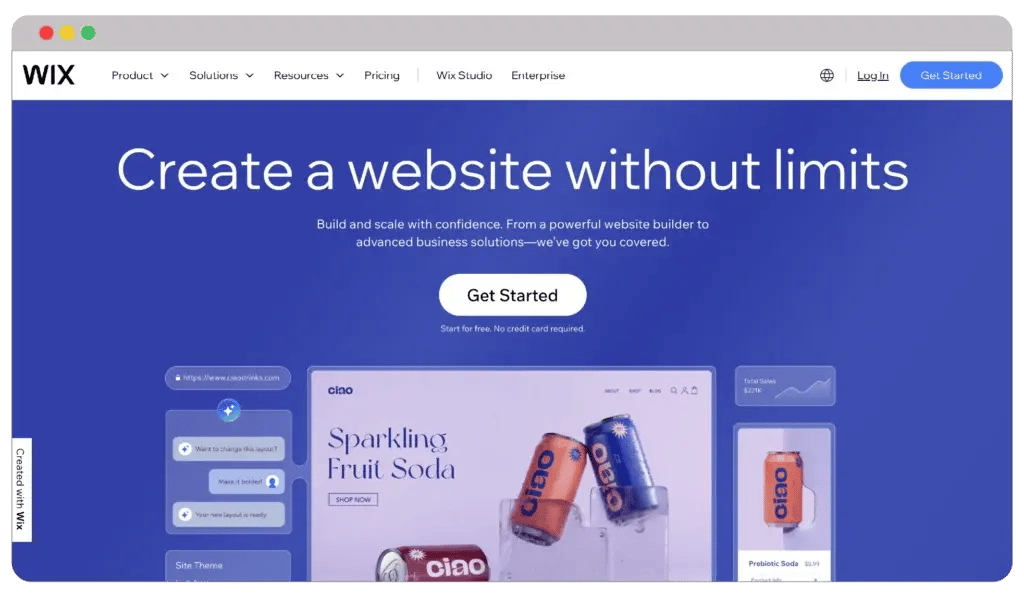
Wix will help you collect leads, manage social media posts, send emails, and improve ad campaigns. But don’t think it’s a less effective website builder just because I didn’t highlight it any sooner.

You can manage everything directly from the Wix dashboard. The unified inbox will help you consolidate client messages from email, Facebook, and live chat. See? I told you Wix has better eCommerce features.
Pros
Cons
Out of all Wix’s features, I prefer the automation ones the most. Regardless of your chosen pricing plan, automation will be included in each one. Unlike Sqaurespace’s automation features, which require you to pay extra, Wix provides them for free.
1. Free: $0
2. Light: $17/month
3. Core: $29/month
4. Business: $36/month
5. Business Elite: $159/month
If you’re facing problems building your website and need help, Wix has got your back. Although I don’t think you will face any confusion as the website building process is easy and clean. But if you need help, Wix’s AI chatbot can help you.
Wix also comes with many third-party apps and integrations. The Wix marketplace has hundreds of free and paid apps. Whether you need social media or marketing app, you can find anything. However, I suggest you look for reviews first.
If you’re looking for another Squarespace alternative with great eCommerce features, I strongly recommend Shopify. But don’t get me wrong. Yes, you can create an eCommerce account, but Shopify is taking it to a new level.
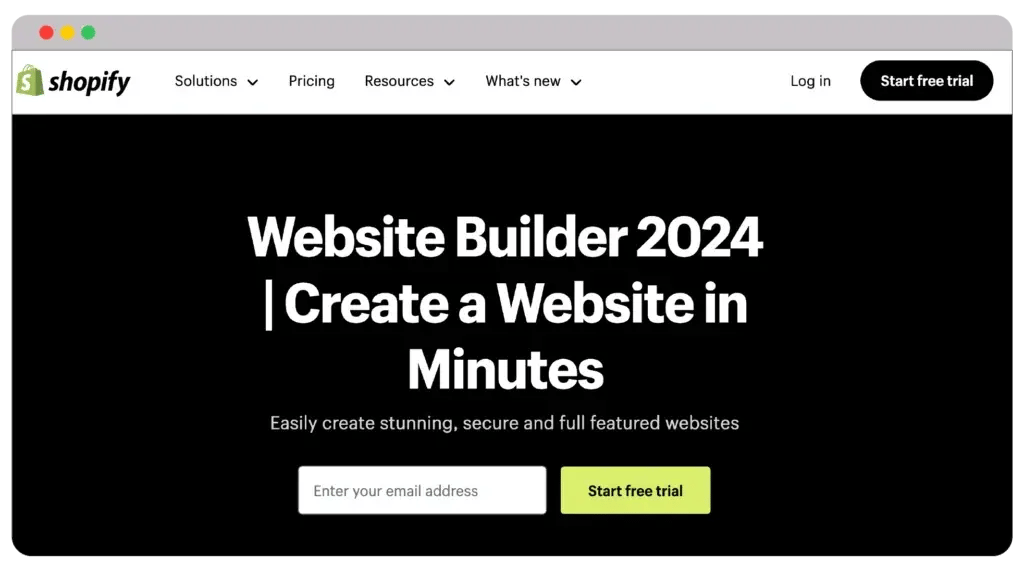
You will get the necessary eCommerce tools to run your online store effectively. This is why I recommend Shopify as one of the best eCommerce website builders.

For instance, you can sell online on Shopify using Facebook Marketplace, Instagram Ads, Amazon, and Walmart and integrate directly with other sales channels. Squarespace and Shopify accept popular payment gateways like PayPal, Stripe, and Apple Pay.
Pros
Cons
However, Shopify’s list of accepted payment methods also includes foreign and cryptocurrency-based payment systems and pay-later services like Affirm and Klarna. If you prefer not to work with a third-party solution, Shopify even has its own payment system.
1. Free Trial: $0
2. Basic: $39/month
3. Shopify: $105/month
4. Advanced: $399/month
5. Plus: $2300/month
Shopify’s app store has thousands of integrations, ranging from social sales platforms like TikTok to loyalty programs like Rise.ai to sales software for procedures like dropshipping and abandoned cart automation.
And if that’s not enough, you can use Zapier’s Shopify connector to add further connectivity to your other apps. In this manner, you may use a project management platform to track orders and automatically add new clients to your email marketing list.
If you’ve been following my website builder blogs, you know I’ve mentioned Jimdo multiple times. Despite being an underdog, Jimdo is one of the Squarespace alternatives I’ve ever seen.
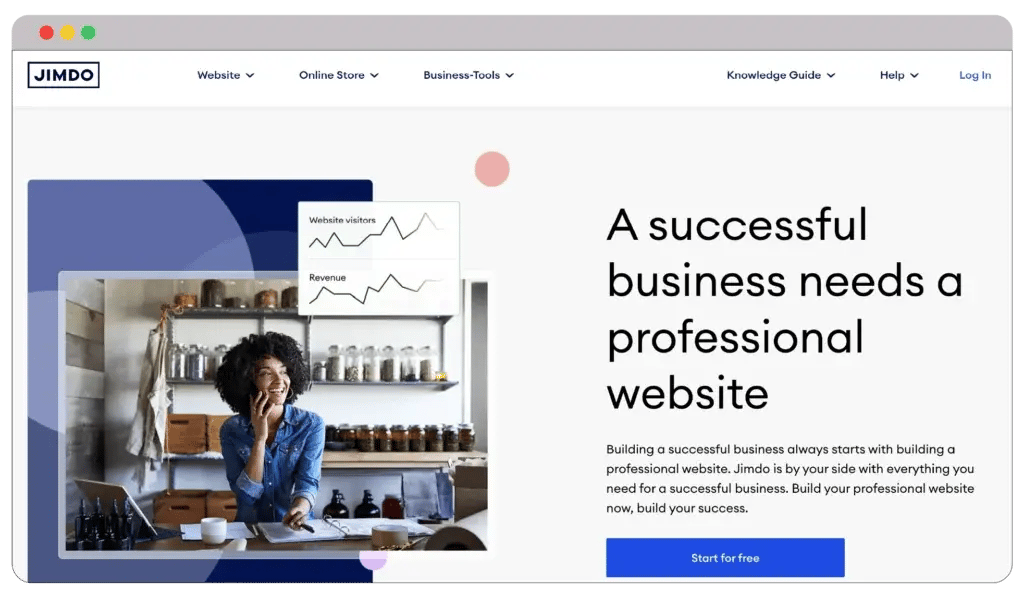
But Jimdo wasn’t always like that. I remember I tried it first around two years ago, and I must say I was really disappointed. However, now they have more unique features and AI implementations to make your website look awesome.

All you need to do is describe the purpose of your site, and Jimdo will handle the rest. It will suggest color palette, format, style, and perfect templates for your needs. Once you provide the necessary information, Jimdo will take a few moments to build a website.
Pros
Cons
However, make sure you don’t forget to customize your website. This is an important part. I have seen many people trusting the AI-generated site blindly.
1. Play: $0
2. Start: $11/month
3. Grow: $17/month
While this is not an entirely bad thing, remember that you cannot depend on AI 100%. It will help you get a starting point, but you must customize your website to reflect your brand identity.
Additionally, Squarespace isn’t short in artificial intelligence. It provides Design Intelligence, or AI-powered tools that create unique copy and website layouts for any purpose your site may require. However, Jimdo is a more affordable website builder than Squarespace.
Webflow is not the Squarespace substitute you should use if you’re inexperienced with website development, value a straightforward user interface, and are new to website creation.
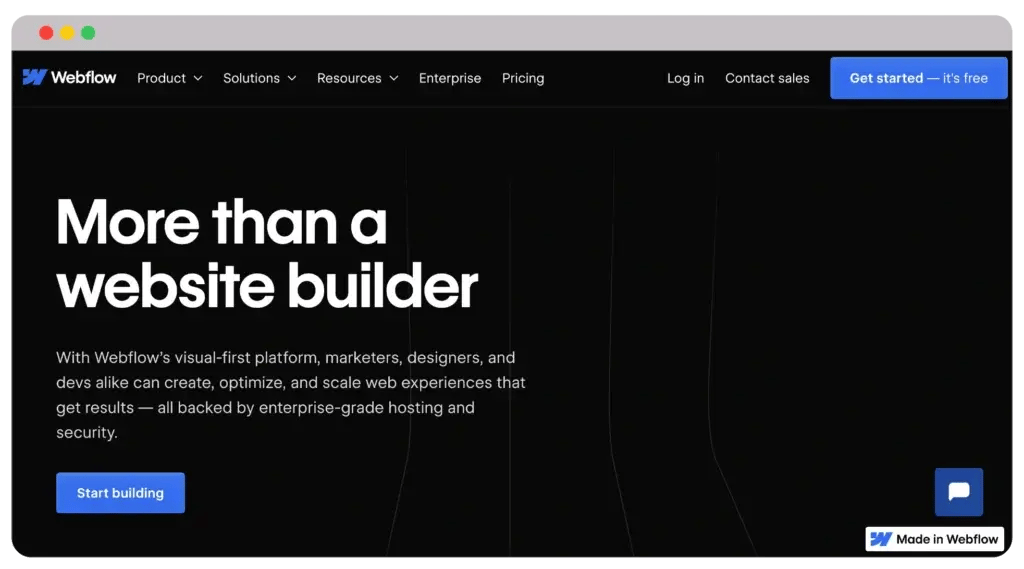
However, Webflow is excellent if you are familiar with site builders and have some coding experience. This Squarespace alternative will prove highly beneficial for your business.

With Webflow, customization is possible down to the last detail, making it a designer’s paradise. If you’re used to sidebar—and button-heavy applications like Adobe Illustrator, you’ll be right at home using it.
Pros
Cons
Every element on the page has repositioning and adjustment options. Additionally, you can use CSS style tags, including H1, paragraph styles, and spacing, to establish global settings.
1. Free: $0
2. Basic: $14/month
3. CMS: $23/month
4. Business: $39/month
5. Enterprise: Contact sales
With over 180 integrations available, Webflow’s library of integrations allows you to further enhance the functionality of your site.
If that’s still not enough, Zapier’s Webflow connector allows you to connect with thousands more people. Check out one of these ready-made templates or read more about automating Webflow.
WordPress powers about 40% of all websites, making it the most widely used content management system. WordPress.com and WordPress.org are two distinct websites, just to be clear. I am referring to WordPress.org.
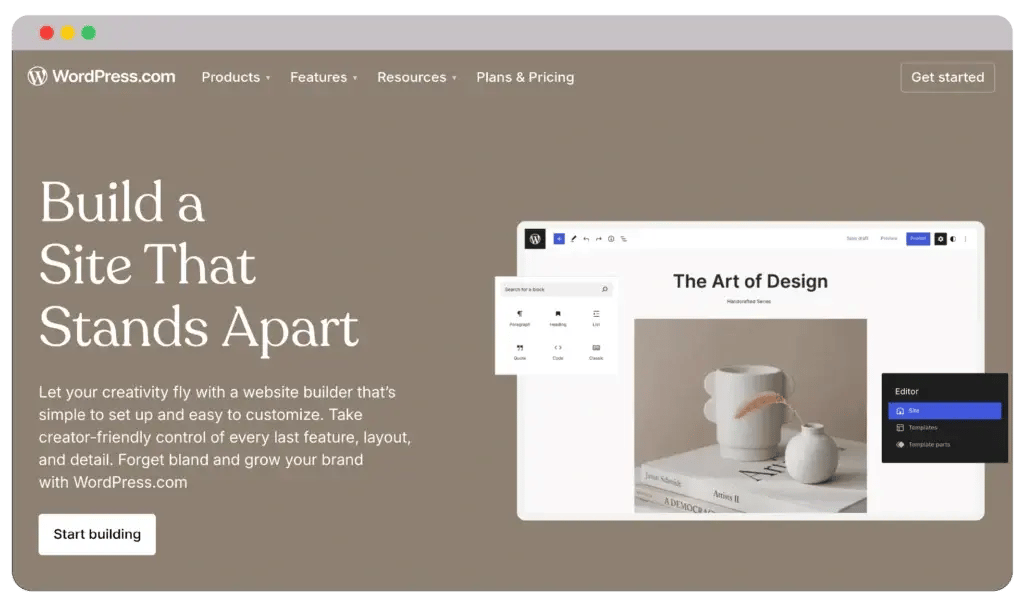
Since WordPress.org is an open source and free content management system, anyone can visit the website and download it without spending any money.

Paying for web hosting, a custom domain name, an SSL certificate, and any other plugins you may wish to install are necessary to maintain a WordPress website. Even so, you’ll save money on hosting and domain fees compared to Squarespace.
Pros
Cons
Building blog entries with WordPress is a breeze thanks to its user-friendly block editor, which is pretty much what you’d expect from a well-known CMS or website builder these days.
1. Personal: $4/month
2. Premium: $8/month
3. Business: $25/month
However, WordPress truly excels at providing an extensive array of control. You can change the code in your primary configuration file, plugins, themes, and more by accessing WordPress’s directory files.
If you’re not afraid of a little technical knowledge and some research into third-party plugins, WordPress is a platform that’s well worth investigating. But make sure you have some capital in your hand.
Despite its confrontational moniker, SITE123 is a service provider specializing in simple and uncomplicated website creation. This Squarespace alternative can undoubtedly live up to your expectations.
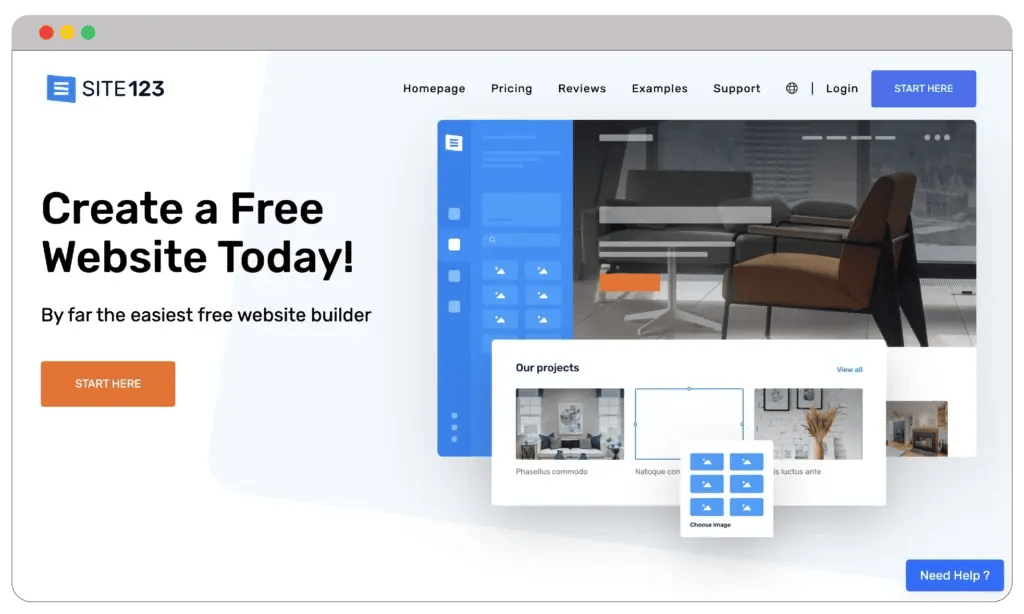
Its primary selling point as a substitute for Squarespace is, in fact, its simplicity of usage. It’s as simple as ABC and 123. It’s far simpler to use SITE123 than it is Squarespace. Additionally, this website builder has some really excellent, simple business features.

SITE123 prioritizes the consumer’s needs, whereas most website builders nowadays prefer to concentrate on customization options, themes, and eCommerce. That emphasis can lead to amazing benefits for some and severe drawbacks for others.
Pros
Cons
Allow me to clarify. SITE123 does not use templates the way other website builders do. Although the editor has a “templates” tab, its primary function is as a layout selector.
1. Free: $0
2. Premium: $14.80/month
That’s quite a good thing, though, because for those unfamiliar with website construction altogether, the sheer number of possibilities that Squarespace or Wix offer can occasionally be daunting.
There is a more helpful tab named “Website Structure” in addition to the templates. I could swiftly and easily alter the whole layout of my page at once. In short, you will really like this free website builder.
There are many remarkable parallels between Squarespace and Hostinger Website Builder, particularly in the available templates. However, there is more to explore here, as good templates do not equate to a good website builder by default.
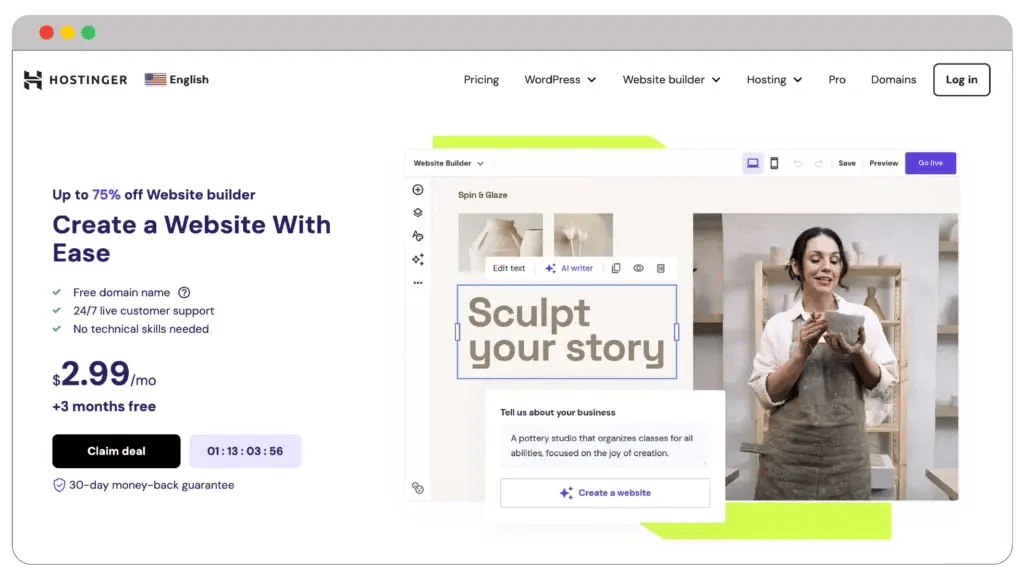
If you’re looking for a Squarespace alternative, Hostinger Website Builder should be at the top. It is the place to go if you want sheer beauty and ingenuity without sacrificing any of Wix’s features and tools.

Though Hostinger Website Builder is relatively new to the website-building industry, its short lifespan shouldn’t deter you from using it because it offers many of the same helpful features found in the finest website builders.
Pros
Cons
Although Hostinger Website Builder doesn’t have as many templates as Squarespace, it does have some really amazing ones.
1. Premium website builder: $2.99/month
2. Business website builder: $3.99/month
However, the website builder itself is less remarkable. Don’t get me wrong; there are some great features, like a mobile editing option and a grid for dragging and dropping items into the right location.
However, there is a small restriction on what you may put on the website. Just nine options are available, including text boxes, photos, and contact forms.
Next on our list is the GoDaddy website builder. Although GoDaddy is more popular as a domain selling platform, the website builder is also great. Its easy-to-use features are geared toward tech-niche business owners.
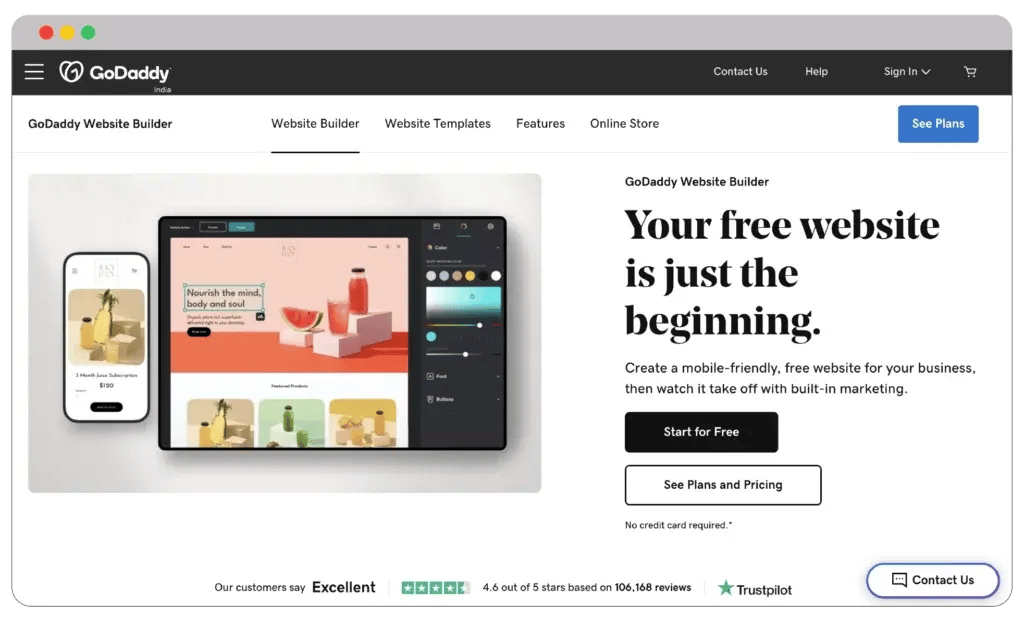
GoDaddy introduced its website builder primarily for the beginner market. This is why its target audiences are usually small businesses and startups.

GoDaddy website builder provides great business features; I’ve never seen the InSight tool used anywhere else. It’s highly beginner-friendly and also delivers exceptional value for its eCommerce and business features.
Pros
Cons
It was quite easy to get the website builder up and running. All I had to do was select a pre-selected option category, enter the name of my site, and click the finish button. That’s all; I can now use the builder to edit my website.
1. Basic: $10.99/month
2. Standard: $11.99/month
3. Premium: $14.99/month
4. Commerce: $20.99/month
Actually, it all depends on your personal preferences for your workflow. When setting up a website, I would have liked more options; selecting a theme, for example, would have been a great addition.
Yes, these are possibilities; they’re just further down the line. With a few instructions and tutorials, the setup process is often quick and easy, and you are largely free to explore at your own pace.
The relatively new Gator website builder was created and maintained by web hosting giant HostGator. Like GoDaddy, HostGator saw an opportunity to leverage its web hosting expertise and create its website builder.
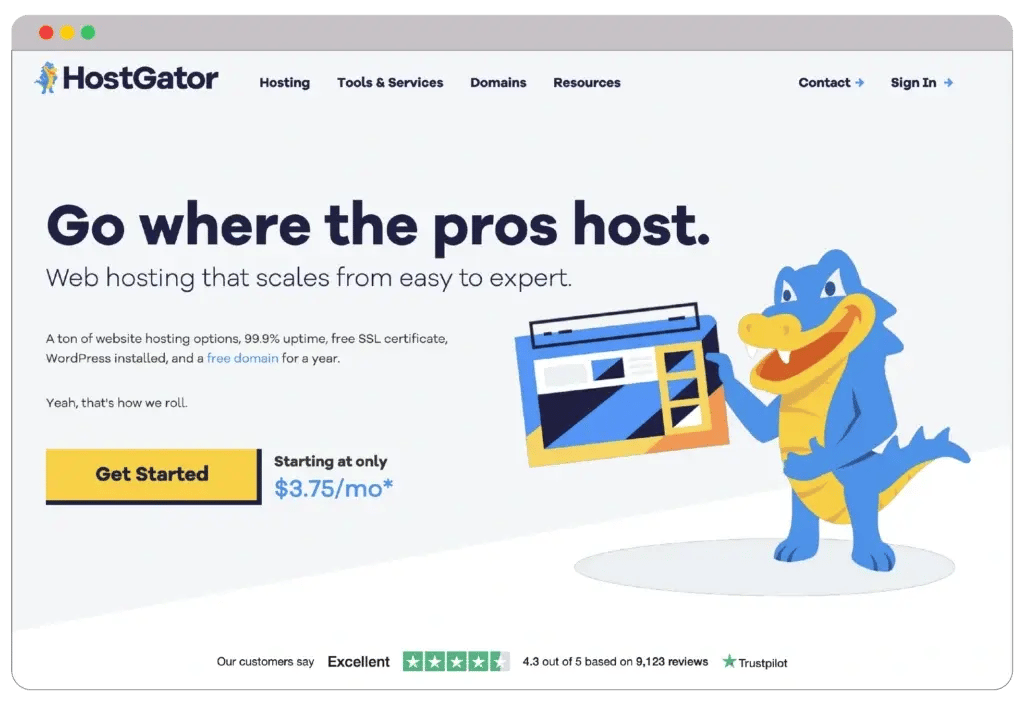
However, like GoDaddy, there are several advantages and disadvantages to this. Make sure you pay close attention to what I’m about to say before you use HostGator.

Compared to Squarespace, this website builder provides an effortless website creation experience. This is significant because Squarespace is already known for its simplicity. Gator is a decent substitute for Squarespace because it is far less expensive.
Pros
Cons
Like Wix, the Gator website builder is a two-pronged solution that provides both a “Traditional” and an easy-to-use “Express” editing experience. I tried both, of course, and the results were not what I had anticipated.
1. Free: $0
With both versions, you may select a theme and template and enter your website’s name, details, and other content.
The distinction arises inside the editor itself. Though the Express builder is even more basic than Wix’s ADI product, the Traditional editor is a standard drag-and-drop editor.
I would make the mistake of excluding Weebly. This free Squarespace alternative is an excellent website builder. Not only will you get a free plan, but the premium plans are also affordable.
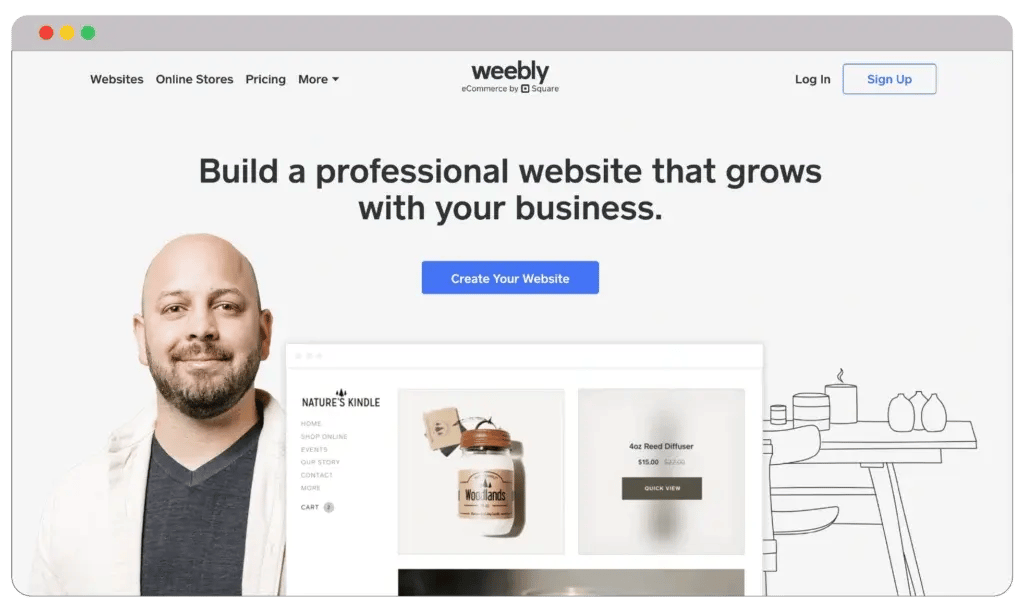
Even if Weebly doesn’t have a sophisticated design or certain sophisticated eCommerce features, it nevertheless offers business owners on a tight budget an easy-to-use platform to create an eye-catching and useful online store.

If money is a major worry and you’re looking for a low-risk way to get started in e-commerce, Weebly seems like a great alternative to Squarespace.
Pros
Cons
Weebly’s biggest benefit is its free plan. In contrast to Squarespace, which only provides a free trial, Weebly enables customers to create and launch a simple website for free, as it offers a free plan.
1. Free: $0
2. Personal: $10/month
3. Professional: $12/month
4. Performance: $26/month
This plan is a great place for businesses to experiment with eCommerce, as it offers fundamental features like drag-and-drop editing, SSL security, and basic SEO capabilities.
Even if the free plan shows Weebly advertisements and restricts customization choices, it’s still an effective way to build an online presence without paying anything.
10Web is one of the best Squarespace substitutes for creating aesthetically pleasing and extremely useful online businesses, especially for those who value easier storefront design.
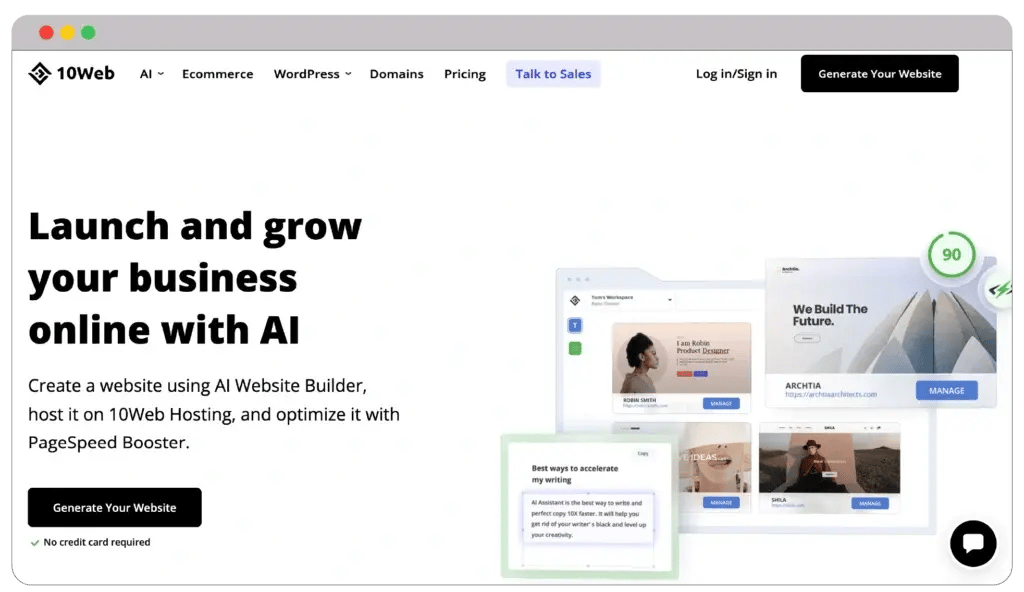
This is made possible by 10Web’s user-friendly visual editor, which enables customers to create and customize eCommerce websites without coding knowledge.

10Web excels because of its remarkable design flexibility, which extends beyond its streamlined design process. In contrast to many website builders that significantly rely on pre-made templates, 10Web gives you total control over every aspect of your online presence.
Pros
Cons
With such fine control, users can create unique, captivating purchasing experiences that match their target market and corporate identity.
1. AI Starter: $10/month
2. AI Premium: $15/month
3. AI Ultimate: $23/month
10Web is a good alternative for small and novice enterprises because it has various eCommerce capabilities, such as configurable product pages, safe checkout options, and integrated payment gateways.
However, I won’t strongly recommend 10Web to eCommerce businesses. It can create flawless business websites, but the same isn’t true for online stores.
Remember that Squarespace is a great website builder. However, it’s not for everyone. And it’s normal to have some drawbacks. But that doesn’t mean Sqaurespace cannot build an effective website.
The Squarespace alternatives are more like a second option. If you’re not satisfied with Squarespace, these website builders will come in handy.
So, have you used any of these Squarespace competitors before? If you did, what’s your most favorite one? Let me know in the comments below.
Listen to business owners like you share how we’ve helped them grow. Your story could be next!





.svg)

“Recently we reached out to Webdew for a website inside of HubSpot and they also did some mocking automation for us.”

“Webdew team was quite honest and quite easy to work with in terms of taking feedback implementing it, showing that it doesn’t happen again and things like making sure that it meets our expectations.”

“We worked with webdew to help us build our HubSpot website and they did an amazing job with it. They were very quick.”

“webdew has helped us optimize the sales and marketing processes, and this is automating a lot of processes.”

“Hi everyone my name is Kara and I work as a channel consultant at HubSpot Singapore. I’ve been working closely with webdew agency”

“Hi my name is Christian from OpenDoors Mortgage team and I’m in the mortgage business and just trying to work on new projects and kind of incorporating HubSpot for my operations”

“I’m one of the technology directors for Travelopia. We are the largest experiential travel company in the world. We’ve engaged webdew recently, not recently, it’s been about a couple of quarters now.”
“We worked with Chehak over the past several months to create a series of animated videos for an academic planner that we produce. And from the very beginning, she was absolutely professional and a pleasure to work with.”


We helped clients multiply their website conversion rates through strategic design and UX optimization.
Our marketing campaigns led to a 20% uplift in customer engagement across digital channels.
Delivered over 2,000 qualified leads through targeted funnels and smart automation.
Our video content has earned 120,000+ views, driving brand awareness and audience retention.
“I recently had the pleasure of working with Chehak on a video demo project, and I was thoroughly impressed with her services.”
.svg)

Access expert tips, trends, and strategies designed for small businesses. Stay ahead of the curve and make informed decisions with our comprehensive resources!