Testing is the process of testing individual modules to ensure an application’s functionality. Two critical forms of testing are e2e and integration testing. Each serving distinct yet complementary purposes. So, What’s the difference between two types of testing?
End-to-end testing rigorously examines an application’s flow from start to finish. It ensures that every integrated component interacts with each other and with external systems in the best possible way.
It simulates real-world usage, thereby verifying comprehensive system functionality. The testing are essential in the age of automation, whereas end-to-end integration is as follows.
Automated end-to-end testing, instead of manual methods enhances efficiency and reliability by executing complex scenarios and validations swiftly and repeatedly without human error.
While e2e testing covers the entirety of the software environment, integration testing ensures checking of the interactions between integrated modules or services. It aims to find all the faults in the interfaces and interactions between these interconnected components.
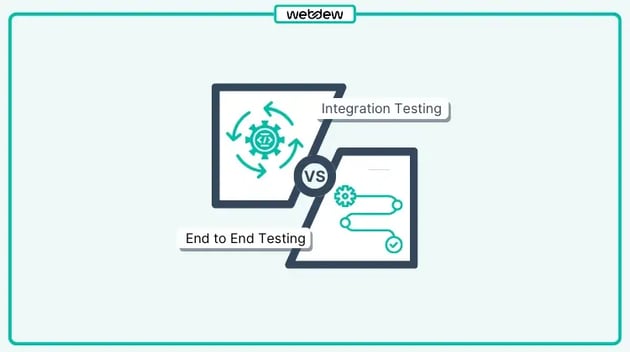
Both type of testing techniques strive to identify bugs and inconsistencies before product releases. But the approaches to integration testing and e2e testing along with the scope of testing differ significantly.
Understanding all the differences is crucial for creating a comprehensive strategy for testing, as it ensures stable and reliable software delivery for the entire system.
Understanding Testing Approaches to End-to-End Testing and Integration Testing
The software development industry emphasizes optimizing strategy for testing. A meticulous approach of testing is done to ensure that software fulfills functional requirements while providing a seamless user experience.
It involves various types of software testing methods, including integration and e2e testing.
Integration Testing
The objective of Integration testing is to focus on the interactions and communication pathways between modules. It connects unit testing, which checks small parts of an app separately, with broader checks of how different parts work together.
The main goal is to find problems with how different parts connect and interact, like APIs and their dependencies.
Integration tests typically employ various testing tools to validate that different parts of the project function harmoniously.
- Modules: Individual unit tests or components of a software project.
- Interfaces: Points of interaction where modules connect and communicate.
- Communication: How data is exchanged between software components.
- Dependencies: External modules or services required for a component to function.
End To End Testing
End-to-end (E2E) testing checks how users experience the application or system from beginning to end. It simulates real-life situations and user paths.
It encompasses all application layers, including UI/UX, external systems, and databases. E2E testing aims to validate the complete user flow, ensuring the app behaves as intended in the environment users will utilize.
Unlike integration testing, which might use stubs and drivers, E2E tests operate with the entire integrated system as a user does, ensuring the application is ready for real-world use.
- User Experience: How a person feels when interfacing with the system.
- UI: User Interface, the point of human-computer interaction and communication in a device.
- App: Application is often used to refer to software used on computers and mobile devices.
- Real-World Scenarios: Conditions under which the software will be used in actual operation.
- User Journey: The complete experience of a user as they navigate through the application.
Comparing Goals and Differences: End-to-end testing vs Integration testing
When testing software, it’s crucial to grasp the different goals and details between integration and end-to-end testing. This section breaks down their purposes and unique traits, considering the pros and cons of each method.
Goals of End to End and Integration Testing Strategy
Let’s take a closer look at the primary objectives of end-to-end vs integration testing. Make sure you pay close attention to each section to ensure you understand their primary goals.
End to End Testing
- Functionality and Reliability: E2E testing checks if the software works well in real situations. It includes the user interface, databases, and external connections.
- Performance: It evaluates the performance and behavior of the system under test. It confirms that all interactions between subsystems and layers meet specific requirements.
Integration Testing
- Combining Modules: The primary goal is to test the interfaces between units or modules. It ensures that they work together correctly within the software project.
- Layer-Specific Functionality: Integration tests often focus on specific application layers within the testing pyramid, such as API interfacing or database connections.
Key Differences between end-to-end testing and integration testing & Use Cases
Now that you know the aims of integration testing and end-to-end testing, let’s explore the main difference between integration testing and e2e testing and how each is used in various scenarios. This will help you make informed decisions about what to choose.
Scope and Execution
- E2E Tests cover the application, simulating user scenarios to identify defects across all systems.
- Integration tests target the interactions between specific modules or layers. It uses top-down or bottom-up approaches.
Automation and Maintenance
- While both automated testing and E2E tests often require more complex automation testing setups and longer execution times, leading to higher maintenance.
- Integration testing can be more granular and focused. It allows for quicker execution and easier maintenance.
Application and Use Case
- E2E Testing is best utilized for verifying horizontal E2E testing (user interaction paths) and vertical E2E testing (system layers).
- Integration Testing is suited for checking interfaces in smaller and more controlled scenarios. It often acts as part of continuous integration processes.
Pros and Cons
Understanding the advantages and disadvantages of end-to-end and integration testing is important. It helps you choose the right approach based on your specific needs.
End-to-End Testing
Pros
- Comprehensive test coverage of the user experience.
- Higher confidence in the stability and scalability of the product.
Cons
- Requires substantial time and budget.
- This testing is more complex troubleshooting to identify the root causes of issues.
Integration Testing
Pros
- More targeted, leading to quicker defect discovery in specific areas.
- Usually, integration testing is less expensive than end-to-end testing in terms of time and resources compared to E2E testing.
Cons
- May miss broader system-wide performance issues.
- Can encounter incompatible interfaces between modules not detected at lower testing levels.
Which Option Will You Go With?
Integration testing and E2E testing play important but different roles in software quality assurance. E2E testing checks if an application works as it should in a real environment, including user actions and system integrity.
Integration testing focuses on ensuring the interactions between various system modules are correct. End-to-end and integration testing methods are both crucial, so working together ensures a strong, user-friendly software product. Using them correctly can greatly enhance the reliability and quality of the final software product.
In conclusion, understanding the differences between end to end testing vs integration testing is crucial for creating a comprehensive testing strategy. It ensures software products’ stability, reliability, and overall quality.



 We typically respond the same day






.svg)









.svg)