

 We typically respond the same day

.png?width=630&name=How%20To%20Rank%20On%20Googles%20AI%20Overviews%20(2026%20Guide).png)
You cannot pay your way into an AI Overview, and you cannot mark your way in either. There is no special schema, no AI-only file format, no toggle that puts your page in the box at the top of the results. Google has said this directly. What gets a page cited in an AI Overview is mostly the same work that has always earned rankings, applied with an understanding of how the AI layer actually pulls and assembles answers.
That last part is where most advice goes wrong. Plenty of guides hand you a checklist without explaining the machine that the checklist is supposed to influence. This piece starts with how AI Overviews retrieve and cite content, then works outward to the tactics that follow from it. Some of those tactics are familiar to SEO. A few cut against habits that made sense a year ago and no longer do.
What an AI Overview is, and how it picks sources
An AI Overview is the AI-generated summary that appears above the traditional results, answering a query in a sentence or a few short paragraphs with citation links out to the pages it drew from. Google has confirmed the underlying mechanism, and it matters for everything that follows.
There is no separate AI index. AI Overviews run on retrieval-augmented generation: the model pulls from the same Search index that powers normal results, then summarizes what it retrieved with clickable links back to the sources. If your content is not earning placement in that index for the relevant intent, it cannot be retrieved, and it cannot be cited. The second mechanism is query fan-out. Rather than answering your exact words, the system issues a set of related sub-queries and assembles the answer from all of them. Ask "how to fix a lawn full of weeds," and Google may simultaneously run "best herbicides," "remove weeds without chemicals," and "prevent weeds in lawn," then stitch the results together.
Two consequences fall straight out of this. First, ranking still matters, but not the way it used to. A Surfer SEO analysis of 405,576 AI Overviews found that 52% of cited sources also rank in the top 10 for the query, which means just under half are pulled from beyond the first page. A smaller site that does not crack the top 10 can still be cited if its content answers the question well. Second, breadth across related sub-queries is its own lever: Surfer's follow-up research found that pages ranking for multiple fan-out queries are far more likely to earn an AI Overview citation than pages ranking for just one.
It helps to know the shape of the thing you are trying to enter. Surfer's data puts the average AI Overview at about 157 words, citing an average of five sources, with 90% of answers listing eight or fewer. The summaries lean on lists: 78% contain an ordered or unordered list. And they paraphrase rather than parrot, including the exact query wording only 5.4% of the time, which tells you keyword matching is not the game.
Why is this worth the effort
AI Overviews are no longer a fringe feature. Semrush, analyzing more than 10 million keywords across 2025, found the share of queries triggering an AI Overview climbed from 6.49% in January to nearly 25% in mid-summer before settling near 16% by November. They show up most for informational searches: close to 89% of AIO-triggering queries carry informational intent, with commercial, transactional, and navigational queries far behind.
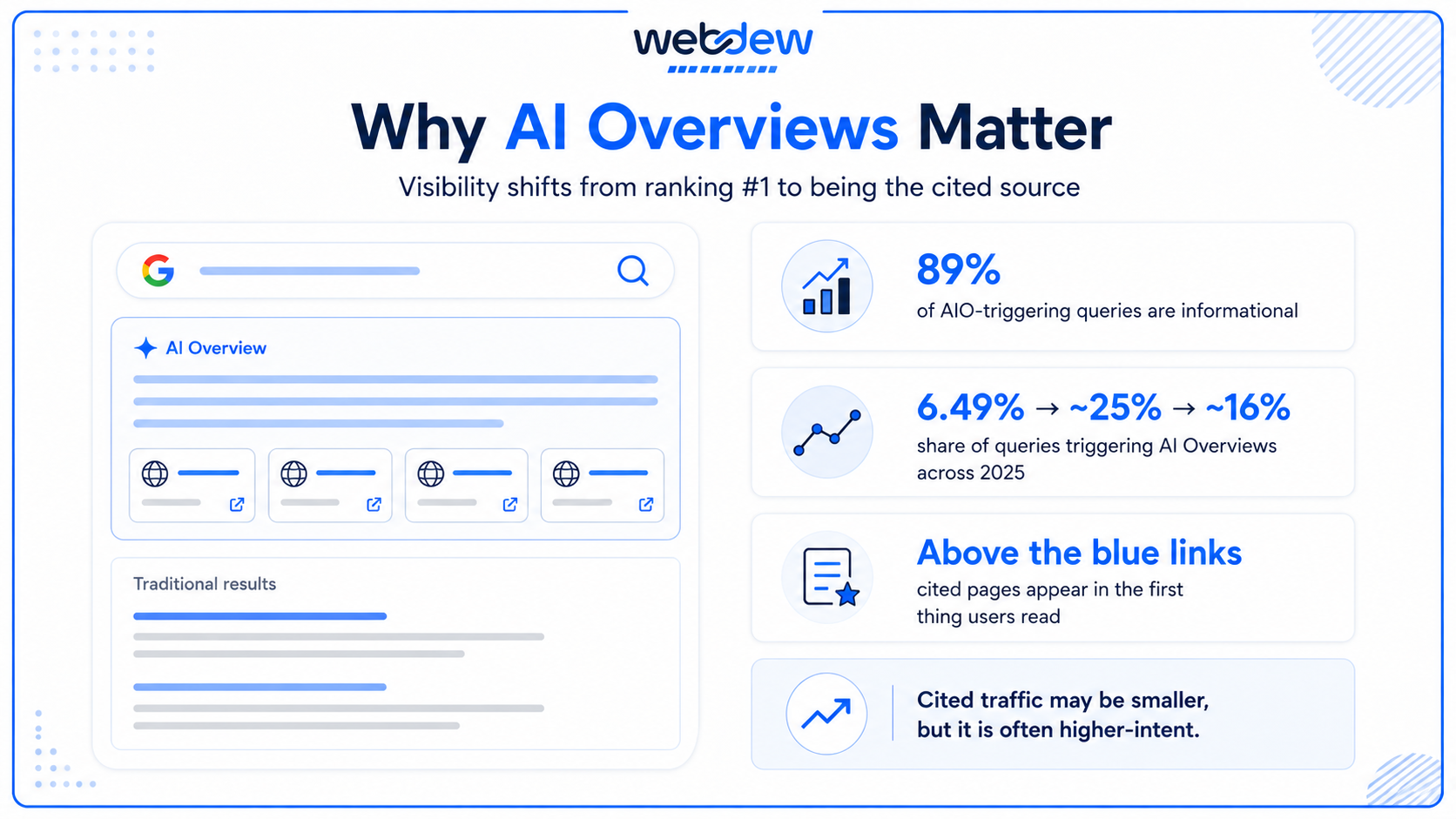
Being cited puts you above the traditional results, in the first thing a user reads. That visibility comes with a tradeoff worth naming honestly. AI Overviews can reduce clicks for pages that are not the cited source, since the summary answers the question on the page. The counterweight is that cited pages can see traffic gains, and the traffic that does arrive tends to convert better. The goal has shifted from "rank number one" to "be the source the summary quotes."
The tactics that actually follow
Here is what the mechanism above implies, in rough priority order.
Earn the ranking first
Because AI Overviews are retrieved from the main index, indexation and ranking are the prerequisites, not an afterthought. More than half of the cited sources already rank in the top 10. Standard on-page SEO still does the heavy lifting: put your primary topic in the title, headings, and opening; write a meta description that earns the click; and meet Google's E-E-A-T bar for expertise, experience, authoritativeness, and trustworthiness. None of this is new, and that is the point. The fundamentals are the foundation that makes AI visibility possible when the other signals line up.
Answer the question fully, in plain language
AI Overviews are triggered overwhelmingly by informational queries, and they reward content that resolves the query rather than dancing around it. Because the system understands meaning rather than matching strings, write for the question, not the keyword. The fact that exact-query wording appears only 5.4% of the time is direct evidence that synonyms and natural phrasing are fine. Cover the topic thoroughly, answer the obvious follow-up questions a reader would have, and keep the prose simple enough to lift cleanly into a summary.
Cover the fan-out, not just the head term
Query fan-out is the most useful new idea here. Since the system assembles answers from related sub-queries, a page that addresses the surrounding cluster of questions has more surfaces to be retrieved on. Map the sub-questions around your topic using People Also Ask, Google Autocomplete, and tools that surface related queries, then structure the page so each sub-question gets a clear, self-contained answer under its own heading. This is also where long-tail, specific, lower-competition queries pay off, since they map neatly onto the fan-out the model is already running.
Structure for extraction
The summaries are short and list-heavy, so make your answers easy to lift. Use clear H2 and H3 headings phrased as the questions people ask. Lead each section with a direct, self-contained answer before the supporting detail. Use lists where the content is genuinely list-shaped, and keep paragraphs tight. None of these forces your way in, but it makes a page easier for the model to retrieve, interpret, and quote.
Get the technical foundation right
A Semrush study of 378,000 citations across major AI platforms found that technical SEO factors function less as direct levers and more as prerequisites: they create the conditions that let AI systems retrieve and parse your content. The practical list is unglamorous. Ensure AI crawlers can reach and read your content through clean HTML and a sensible heading hierarchy. Keep the site fast and mobile-friendly, since pages with strong engagement signals tend to be cited more, likely because those same pages share the structural clarity that makes content easy to surface. One oddly specific finding from the same study: URL slugs between 21 and 25 characters drew the most citations, a reminder that clean, concise URLs help.
Build credibility off the page
Pages from sources that are widely cited and trusted tend to get picked up more often, which lines up with Google's emphasis on authority. Earn mentions in reputable publications, keep your brand presence consistent across channels, and treat citations of your brand, even unlinked ones, as the currency they are becoming. Quality of reference beats volume.
Keep content current
AI Overviews favor fresh, accurate information. Update your high-value pages so they reflect the current state of the topic rather than last year's. Stale content that no longer matches reality is easy for the system to pass over in favor of something newer.
What to stop doing
A few once-common recommendations have aged badly, and following them now wastes effort or risks penalties.
You do not need to create special files, markup, or formats for AI. Google has stated plainly that there is no AI-specific schema and no machine-readable file that earns you a place in generative results. Standard structured data still helps you qualify for rich results in normal search, which is worth doing on its own merits, but it is not a backdoor into AI Overviews.
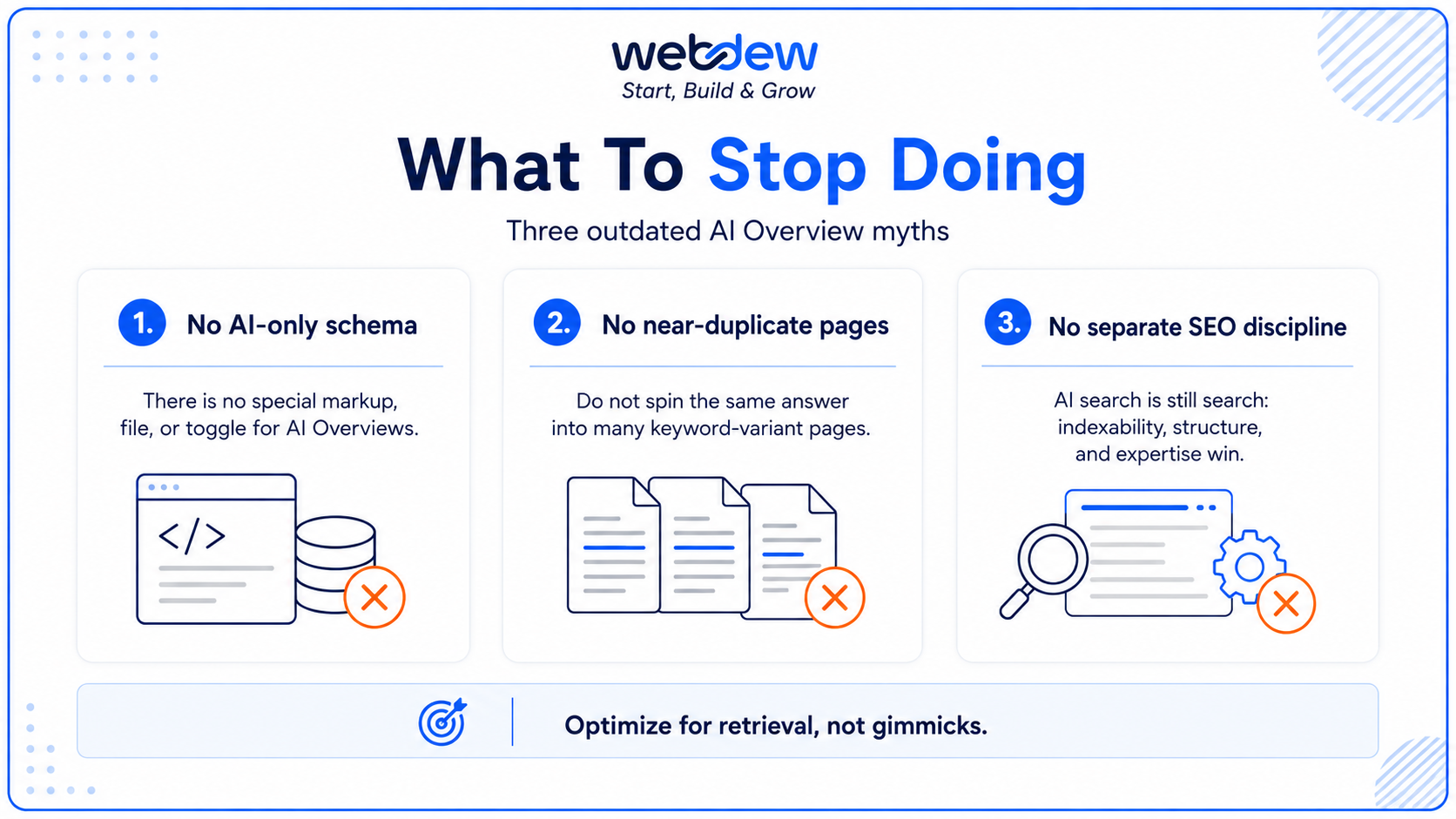
Do not rewrite your copy to chase long-tail keyword variants for the model's benefit. Google's systems understand synonyms and intent, and spinning up near-duplicate pages to capture phrasing variations can trip the scaled-content-abuse policy. Cover the genuine sub-questions, not the same answer reworded fifteen ways.
And stop treating AI Overview optimization as a separate discipline with its own tricks. The most accurate framing, and the one Google itself pushes, is that AI search is still search. The surface keeps expanding; the fundamentals underneath, indexability, clear structure, and genuine expertise do not.
The short version
Ranking in Google's AI Overviews comes down to a sequence. Earn placement in the index for the intent you care about, because retrieval starts there. Answer the real question and the cluster of questions around it in plain language, because fan-out rewards breadth. Structure the page so a summary can lift a clean answer out of it. Get the technical and credibility fundamentals right so nothing blocks retrieval. Then keep it current. There is no shortcut hiding behind a markup tag. The work is the same, aimed at how the AI layer reads.
Dive Into our
Client Testimonials
Listen to business owners like you share how we’ve helped them grow. Your story could be next!





.svg)

“Recently we reached out to Webdew for a website inside of HubSpot and they also did some mocking automation for us.”
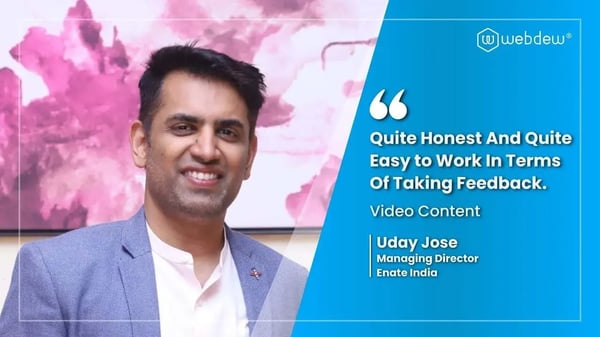
“Webdew team was quite honest and quite easy to work with in terms of taking feedback implementing it, showing that it doesn’t happen again and things like making sure that it meets our expectations.”
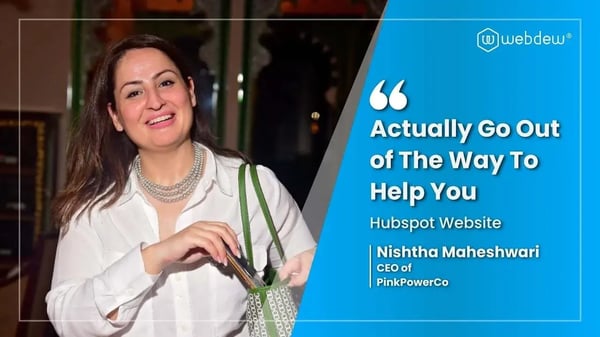
“We worked with webdew to help us build our HubSpot website and they did an amazing job with it. They were very quick.”
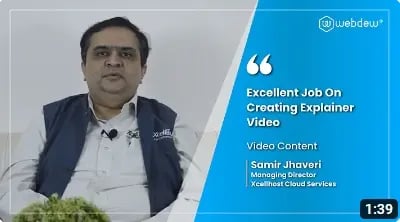
“webdew has helped us optimize the sales and marketing processes, and this is automating a lot of processes.”
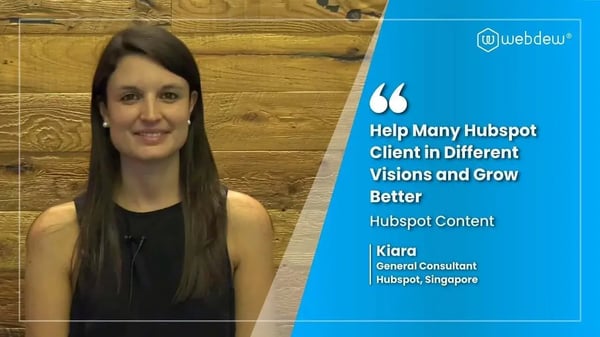
“Hi everyone my name is Kara and I work as a channel consultant at HubSpot Singapore. I’ve been working closely with webdew agency”
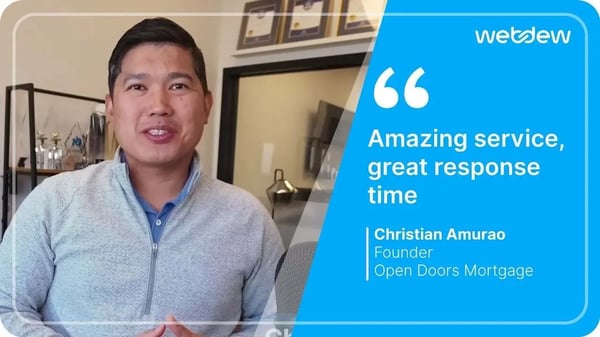
“Hi my name is Christian from OpenDoors Mortgage team and I’m in the mortgage business and just trying to work on new projects and kind of incorporating HubSpot for my operations”
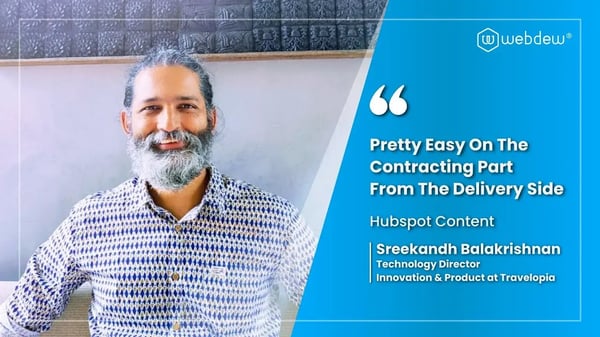
“I’m one of the technology directors for Travelopia. We are the largest experiential travel company in the world. We’ve engaged webdew recently, not recently, it’s been about a couple of quarters now.”
“We worked with Chehak over the past several months to create a series of animated videos for an academic planner that we produce. And from the very beginning, she was absolutely professional and a pleasure to work with.”


6x
We helped clients multiply their website conversion rates through strategic design and UX optimization.
20%
Our marketing campaigns led to a 20% uplift in customer engagement across digital channels.
2K+
Delivered over 2,000 qualified leads through targeted funnels and smart automation.
120+
Our video content has earned 120,000+ views, driving brand awareness and audience retention.
“I recently had the pleasure of working with Chehak on a video demo project, and I was thoroughly impressed with her services.”
.svg)

Additional Resources
Access expert tips, trends, and strategies designed for small businesses. Stay ahead of the curve and make informed decisions with our comprehensive resources!